Categories

You can’t manage what you can’t measure. That’s why understanding ROI in Business matters so much when you’re trying to figure out if your investments actually pay off.
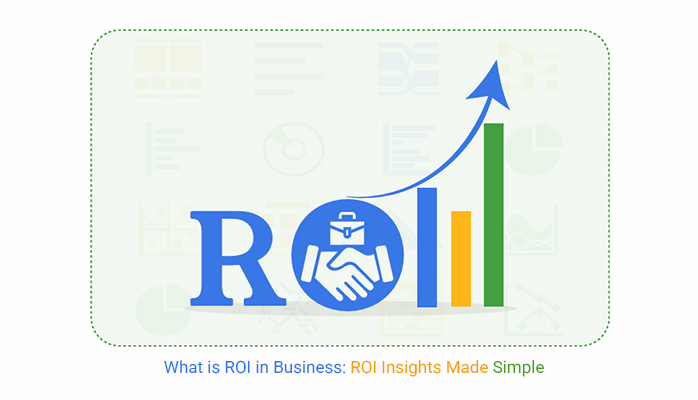


It’s the difference between throwing money at problems and making strategic bets that drive real growth.
From scrappy startups weighing their first hires to Fortune 500 companies optimizing billion-dollar projects, ROI in Business serves as the universal scorecard.
It keeps teams honest, budgets tight, and strategies grounded in what actually works.
Definition: ROI in Business is a financial metric that measures how much profit you’re generating relative to what you’re spending. Think of it as your investment’s report card.
In practical terms, ROI in Business shows the percentage return a company earns when it deploys resources into a project, campaign, or asset. This metric lets organizations stack different initiatives against each other without getting lost in the weeds.
Whether you’re evaluating marketing spend, tech infrastructure upgrades, or process improvements, business return on investment cuts through the noise and delivers a clean snapshot of value creation and financial efficiency.
It’s what separates guesswork from data-backed decision-making. ROI gives organizations the ability to translate messy performance into clean, measurable outcomes that actually align with profitability goals. Here’s why it matters:
The standard ROI formula is:
ROI (%) = (Net Profit ÷ Investment Cost) × 100
Net profit represents the total financial gain after you’ve subtracted all associated expenses from revenue.
Investment cost includes every single expense required to execute the initiative, from operational costs to supporting resources. Don’t skip the small stuff. Those hidden costs add up.
Calculating ROI demands structured data and disciplined evaluation. When you apply it correctly, it reveals the true business return on investment for any initiative. Here’s the breakdown:
Understanding how to calculate return on investment capital ensures your ROI reflects genuine financial outcomes rather than wishful thinking.
To better understand ROI in Business, consider a marketing campaign example. A company invests $10,000 in a digital campaign and generates $15,000 in revenue. After deducting the initial cost, the net profit is $5,000.
Using the formula:
ROI = ($5,000 ÷ $10,000) × 100 = 50%
This result shows a positive ROI, indicating the campaign delivered measurable value. Visualizing such outcomes using financial charts can enhance interpretation and communication even further.
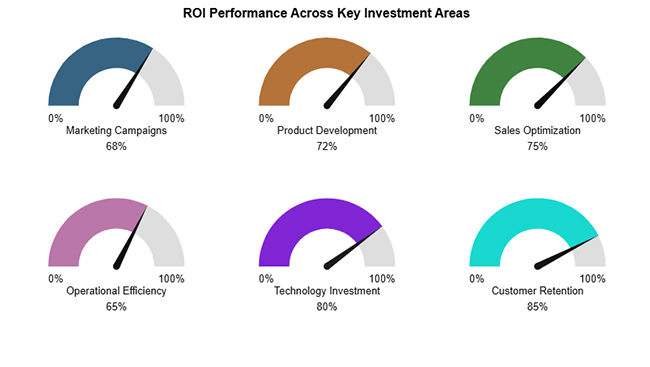
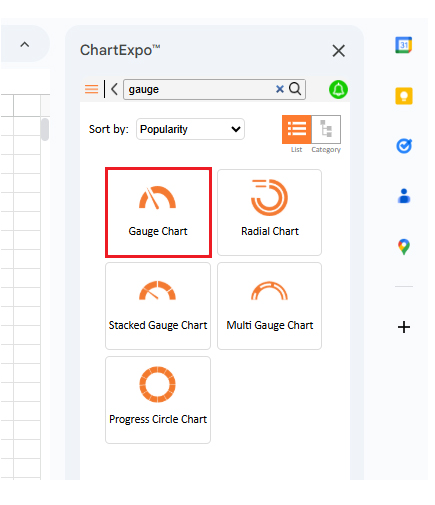
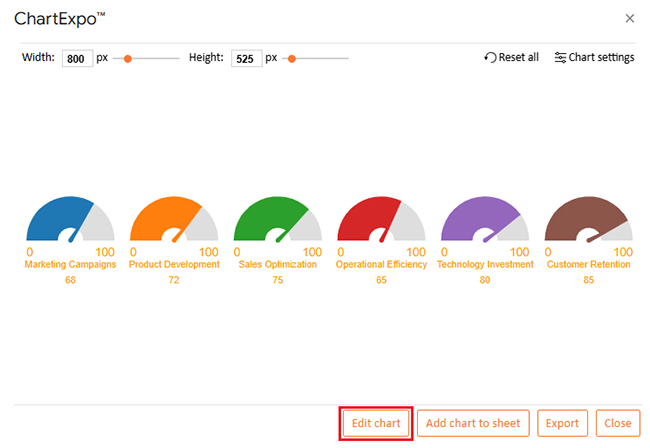
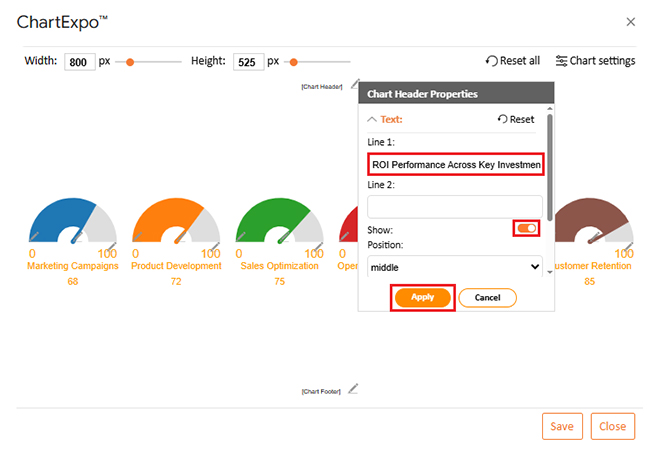
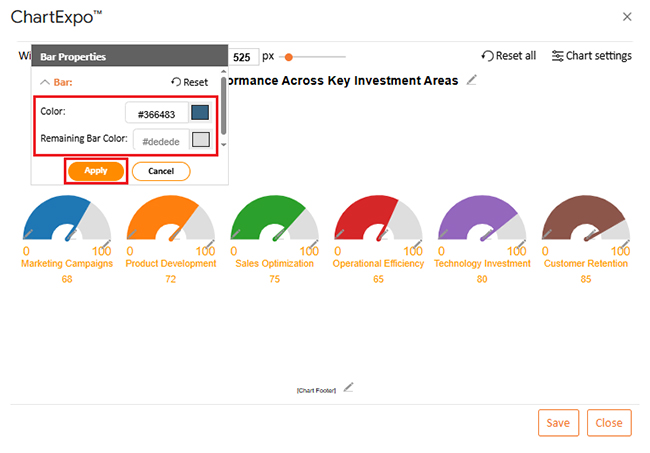
The Gauge Chart highlights how key investment areas are progressing toward their ideal ROI targets, clearly showing strengths and improvement opportunities.
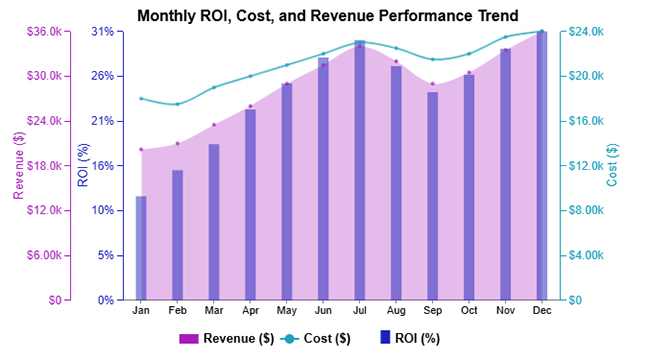
The Multi Axis Line Chart illustrates how revenue, costs, and ROI move together over time to reflect overall performance trends.
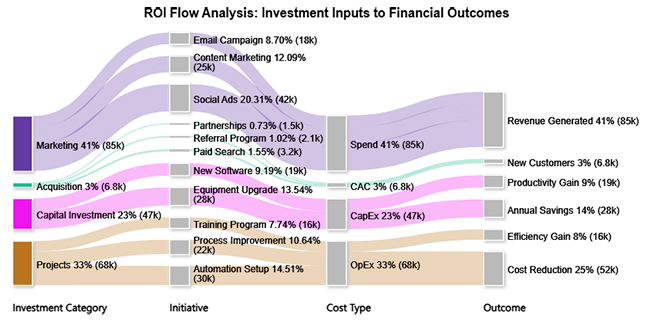
The Sankey chart shows how business investments flow across different expense categories, clarifying resource allocation and ROI impact.
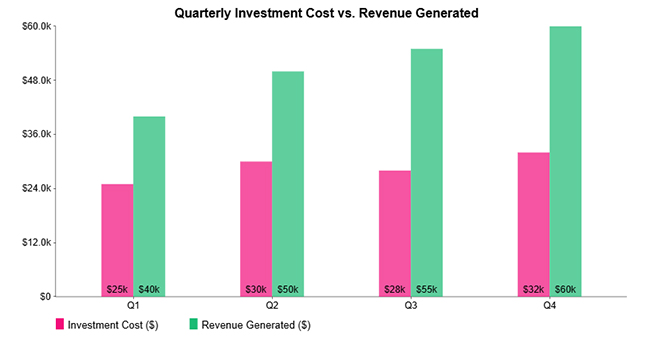
The Clustered Column Chart compares quarterly investment costs with generated revenue to highlight ROI performance trends.
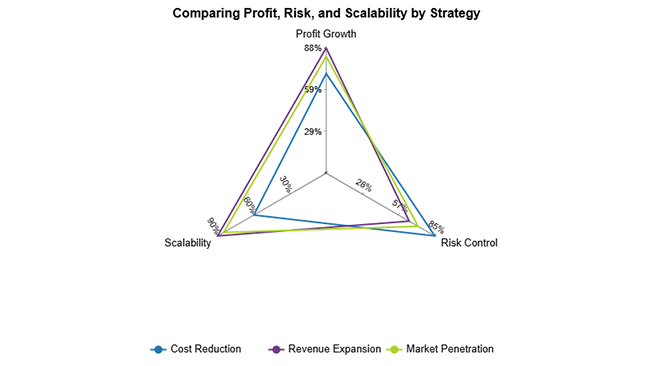
The Multi Axis Spider Chart compares investment strategies across profit growth, risk control, and scalability to support ROI-focused evaluation.
Analyzing ROI in Business in spreadsheets gives you clarity, flexibility, and transparency when handling financial data. It’s where the numbers stop hiding and start telling stories. Here’s how to set it up right:
ChartExpo transforms static spreadsheet data into meaningful visual narratives. By turning ROI figures into dynamic visuals, it bridges the gap between numbers and business insights, helping stakeholders quickly understand performance trends. This approach supports better business analytics without drowning you in complexity.
Why use ChartExpo?
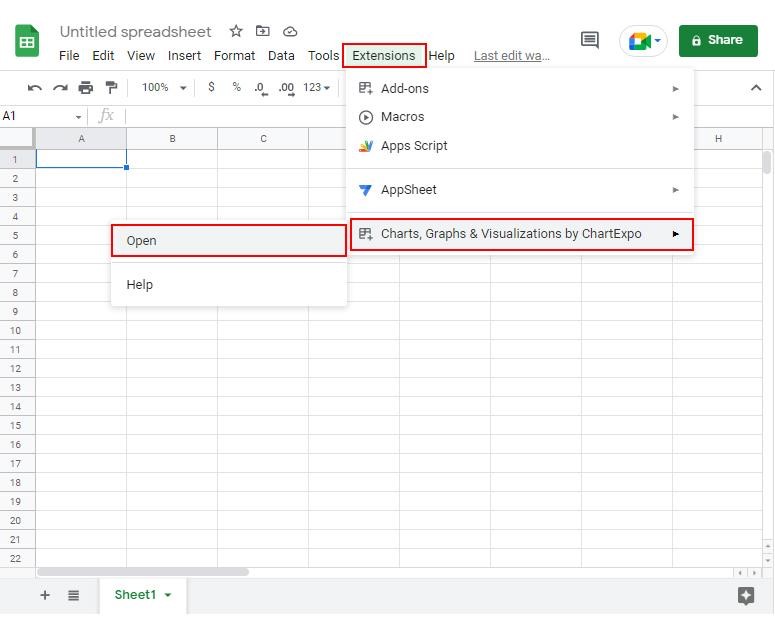
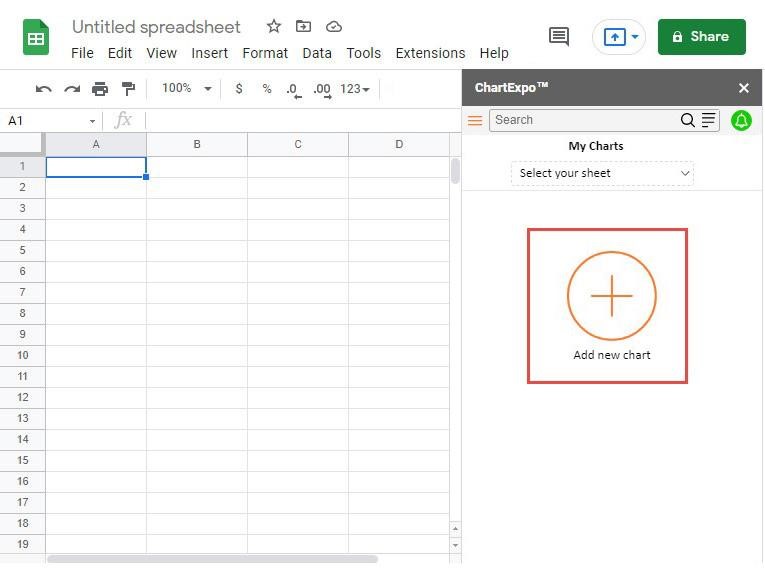
How to install ChartExpo in Google Sheets?
Consider we have the following data for the Gauge Chart.
| Investment Area | Actual ROI (%) | Target ROI (%) |
| Marketing Campaigns | 68 | 100 |
| Product Development | 72 | 100 |
| Sales Optimization | 75 | 100 |
| Operational Efficiency | 65 | 100 |
| Technology Investment | 80 | 100 |
| Customer Retention | 85 | 100 |
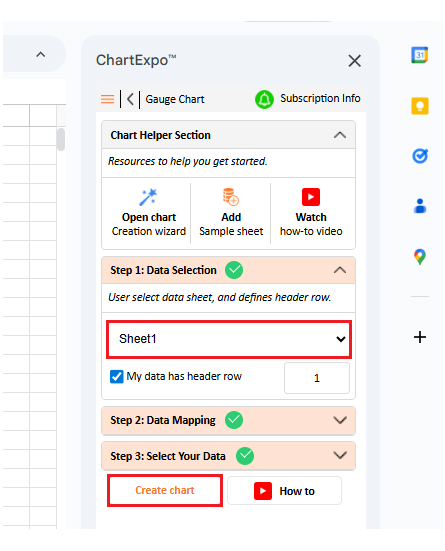
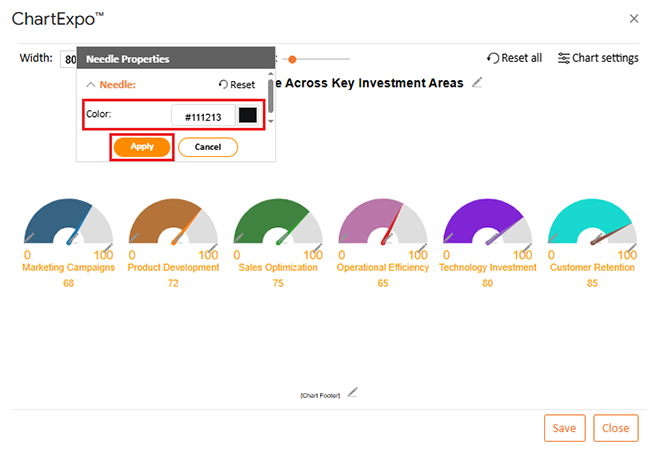
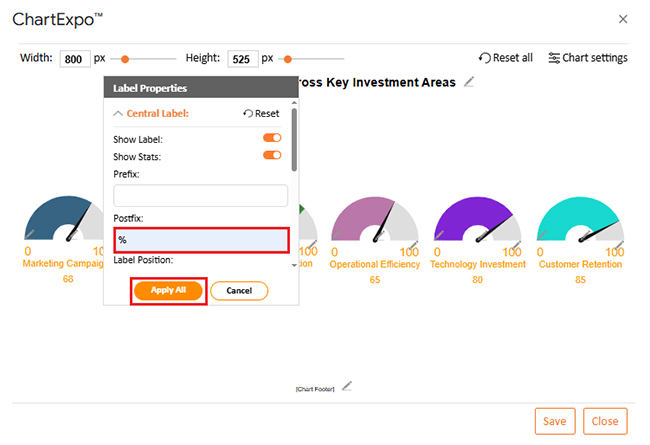
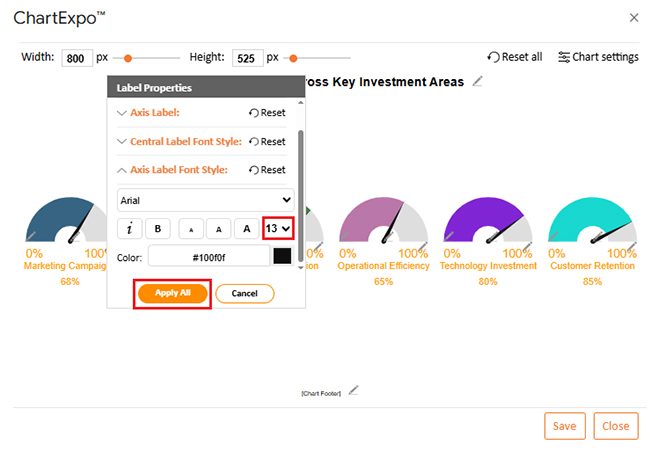
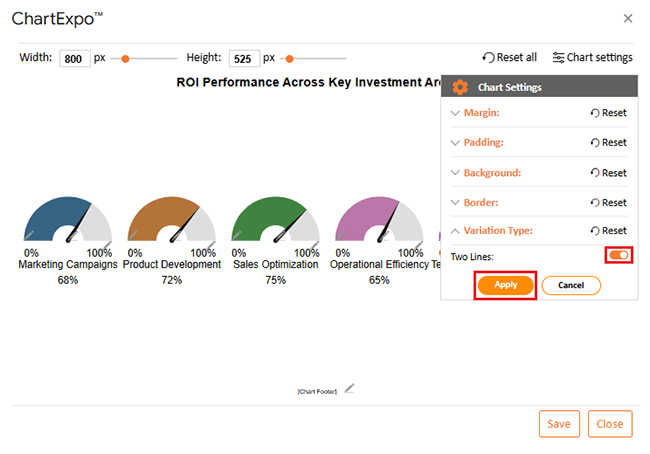
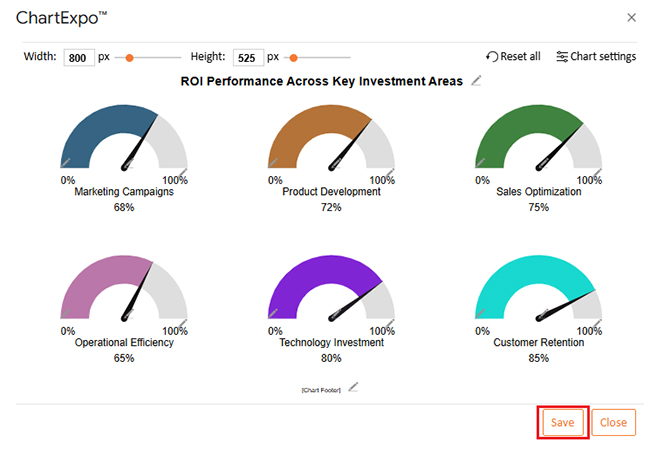
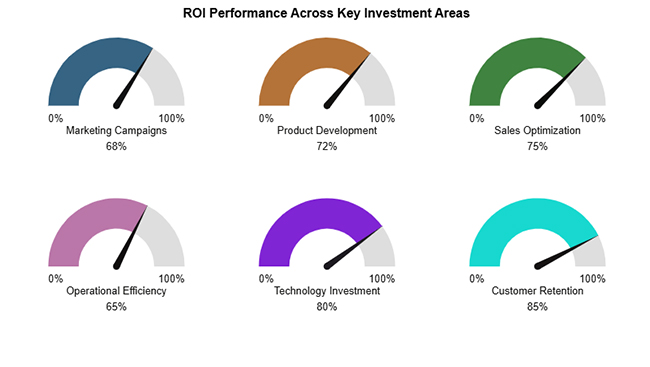


It offers organizations a structured way to evaluate success and improve strategic alignment across operations. It’s not just about tracking numbers. It’s about making those numbers work for you:
When combined with analytics tools for business, ROI becomes a powerful driver of informed growth.
Applying ROI in Business effectively requires consistency and context. Following best practices ensures accurate interpretation and meaningful comparisons:
Despite its value, ROI in Business has limitations that decision-makers must understand to avoid misinterpretation. No single metric tells the whole story:
To address these gaps, ROI in Business should be reviewed alongside return on assets vs. return on equity for a more complete financial view. Long-term accuracy can be further improved through financial forecasting for startups and established businesses.
A good ROI for Business depends on industry standards, risk tolerance, and investment type. Generally, a positive ROI exceeding capital costs is considered favorable. Different sectors have different benchmarks, so context matters.
Industries vary in margins, capital intensity, and growth cycles. As a result, acceptable business return on investment levels differ significantly between sectors like technology, manufacturing, and services. What’s strong in one industry might be weak in another.
ROI in Business should be measured regularly, monthly, quarterly, or annually, depending on project duration and strategic importance. More frequent measurement helps you catch problems early and capitalize on wins.
Understanding ROI in Business enables smarter investment decisions, clearer performance evaluation, and sustainable growth.
When paired with structured analysis and visualization tools like ChartExpo, businesses can transform numbers into insights that support confident, data-driven strategies across projects, teams, and long-term objectives.
It’s the metric that keeps you honest about what’s working and what isn’t.
How much did you enjoy this article?


Calculate accounts receivable turnover ratio to measure credit collection speed, improve cash flow, and strengthen your financial strategy. Read on!
Change Management KPIs are the key to tracking adoption, performance, and ROI during transitions. Find out which metrics matter. Read on!
Data collection methods and techniques determine the quality of every insight you act on. Explore key approaches for gathering reliable data. Read on!