Categories

Data-driven decisions depend on a foundational choice made before any analysis begins: whether to generate new information or work with what already exists.
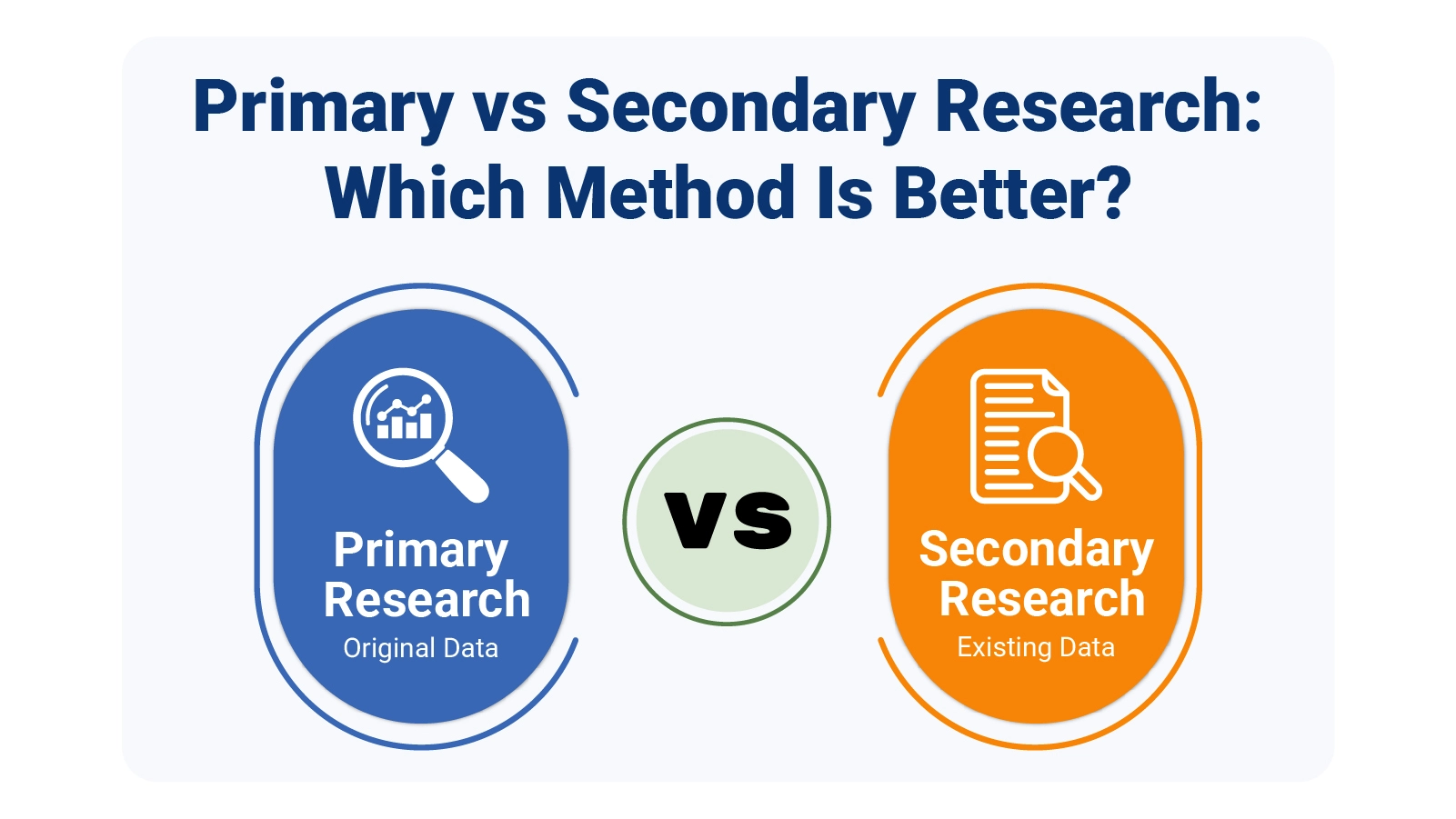
Primary vs secondary research defines that divide, and each path carries meaningful consequences for data quality, cost, timeline, and the reliability of conclusions.
This guide explains both approaches, compares their core differences, and shows how to apply both approaches across business scenarios.
Whether you are building a new study from scratch, leveraging existing datasets, or deciding when to combine both, a clear grasp of these methods is essential for producing insights that hold up under scrutiny.
Definition: Primary research is the process of collecting original data directly from first-hand sources to answer a specific question or defined objective. In primary vs secondary research, this approach produces entirely new datasets structured around precise analytical goals.
Because researchers control every stage of data collection, from variables measured to how responses are recorded, the resulting information is highly targeted. This control makes primary research especially valuable when existing data cannot adequately address the problem.
Common collection techniques include surveys, interviews, focus groups, observational studies, and controlled experiments. Organizations use these methods to gauge customer satisfaction, test market assumptions, and validate strategies.
Definition: Secondary research draws on data already gathered by other researchers or institutions for separate purposes. When evaluating primary vs secondary research, this approach converts existing work into analytical value rather than generating raw data from scratch.
Typical sources include government databases, academic journals, industry reports, and historical records. Because this information already exists, broad datasets can be accessed quickly and at low cost.
Reliability depends on source quality and contextual fit with current objectives. Secondary research suits situations where budget, timelines, or respondent access limits direct collection.
Both methods inform decisions, but the operational mechanics of primary and secondary research differ considerably.
|
Aspect |
Primary Research |
Secondary Research |
| Data Source | Collected firsthand | Previously published |
| Cost & Time | Higher investment | Lower investment |
| Accuracy | Highly specific | Context-dependent |
| Data Control | Full control | Limited control |
| Reliability | Strong if well designed | Depends on source quality |
| Examples | Surveys, experiments | Reports, databases |
Each approach serves distinct analytical purposes; selecting correctly ensures both precision and efficient use of resources.
Understanding primary and secondary research also requires recognizing the methodological categories within each approach and how they serve different analytical goals.
Executing secondary vs primary research correctly means matching collection and analysis methods to the nature of the data being gathered.
Practical scenarios illustrate how organizations across various sectors apply both approaches. The examples below make the methodological distinction concrete and show how each approach addresses specific analytical challenges in real-world business and research contexts.
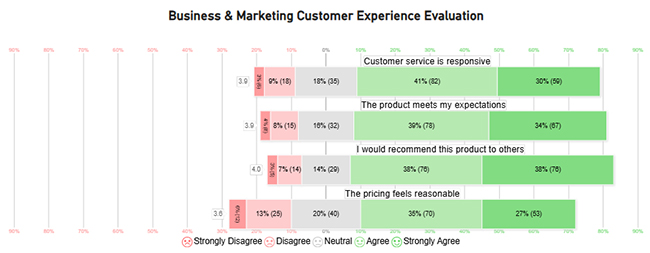
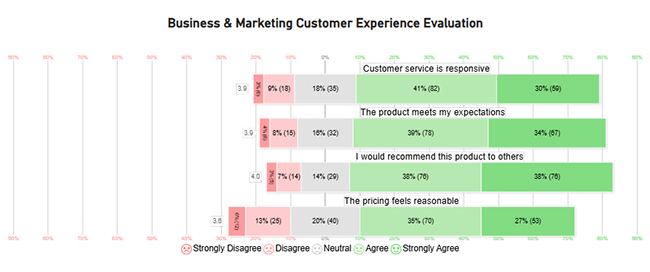
A marketing team conducted a customer satisfaction survey to evaluate product experience, pricing perception, service quality, and recommendation intent. Results revealed strong brand advocacy and high satisfaction with service delivery, while pricing emerged as the primary area requiring improvement.
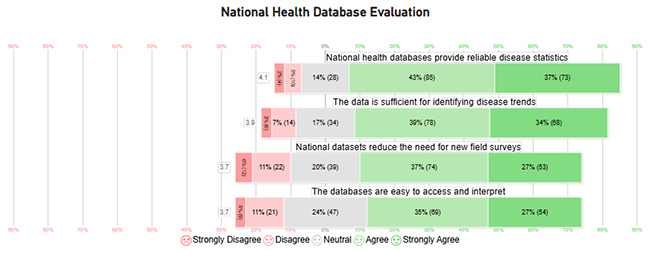
Researchers reviewed national health databases to assess data reliability and usability across institutions. The evaluation found strong agreement on accuracy and trend identification, with moderate concerns about accessibility and a reduced need for new field-based data collection efforts.
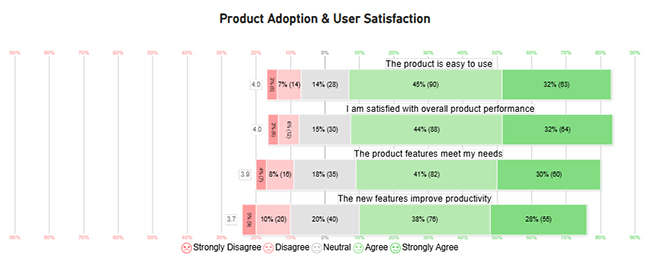
A technology company analyzed user feedback to assess product adoption and overall satisfaction levels. Usability and performance scored consistently high across most response categories, while findings identified clear opportunities to improve feature-driven productivity outcomes for active users.
Reliable results from both research approaches depend on clear objectives, disciplined collection, and structured validation.
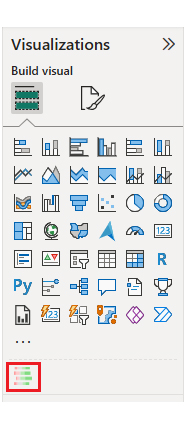
Analyzing both research types in Power BI follows a clear and structured approach.
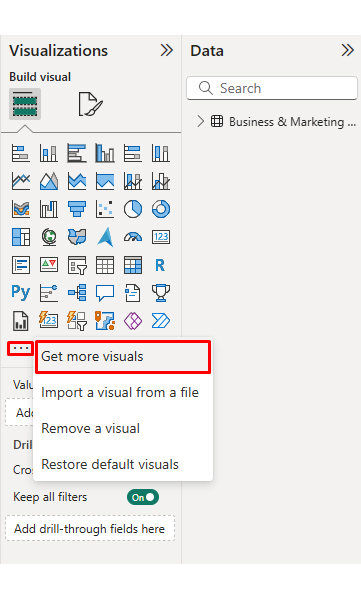
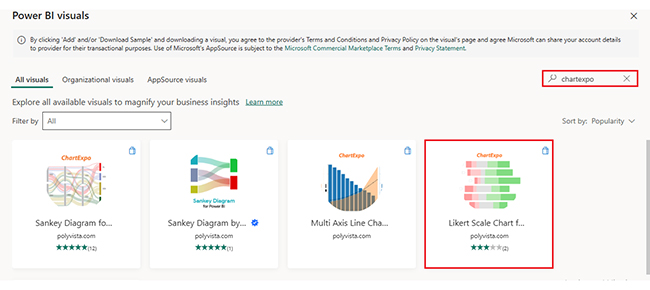
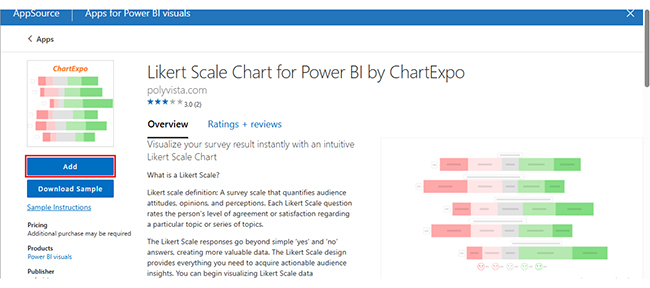
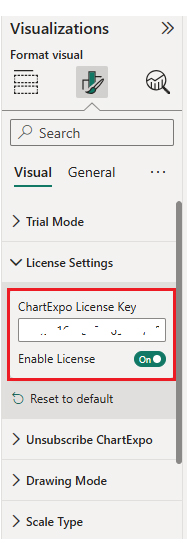
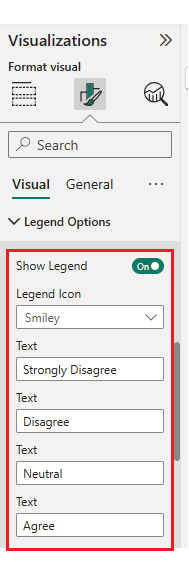
The quality of visualization directly shapes what can be understood from perception-driven research data. Power BI offers a capable set of native visuals, but ChartExpo extends those capabilities with chart formats purpose-built for analytical storytelling, making response distributions and comparisons more intuitive.
Why use ChartExpo?
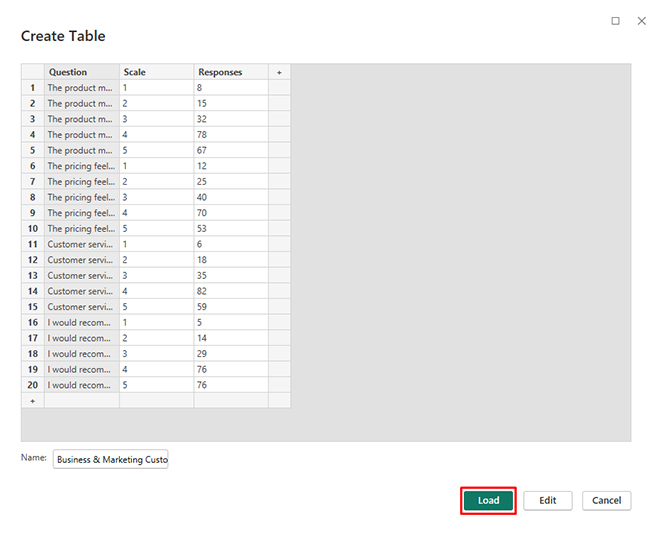
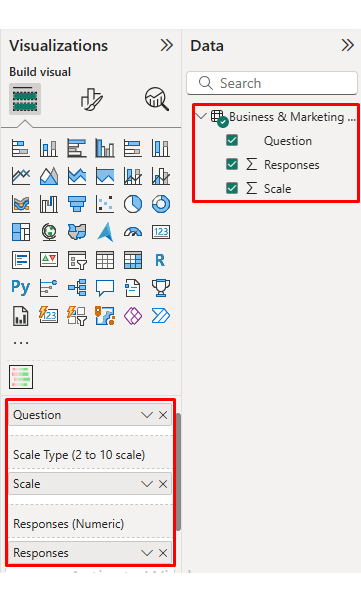
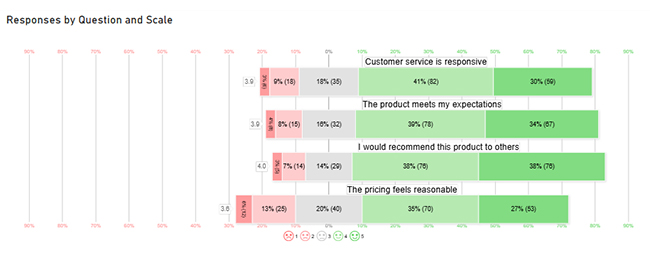
Consider we have the following data for the Likert Scale Chart.
| Question | Scale | Responses |
| The product meets my expectations | 1 | 8 |
| The product meets my expectations | 2 | 15 |
| The product meets my expectations | 3 | 32 |
| The product meets my expectations | 4 | 78 |
| The product meets my expectations | 5 | 67 |
| The pricing feels reasonable | 1 | 12 |
| The pricing feels reasonable | 2 | 25 |
| The pricing feels reasonable | 3 | 40 |
| The pricing feels reasonable | 4 | 70 |
| The pricing feels reasonable | 5 | 53 |
| Customer service is responsive | 1 | 6 |
| Customer service is responsive | 2 | 18 |
| Customer service is responsive | 3 | 35 |
| Customer service is responsive | 4 | 82 |
| Customer service is responsive | 5 | 59 |
| I would recommend this product to others | 1 | 5 |
| I would recommend this product to others | 2 | 14 |
| I would recommend this product to others | 3 | 29 |
| I would recommend this product to others | 4 | 76 |
| I would recommend this product to others | 5 | 76 |




Weighing the advantages and limitations of primary vs secondary research supports better-structured studies and more reliable outcomes.
Advantages
Limitations
Advantages
Limitations
Applying primary vs secondary research effectively requires careful planning, source discipline, and consistent methodological rigor throughout.
The right method in primary vs secondary research depends on three factors: the precision required, available resources, and timeline constraints. When the objective demands original, highly targeted data, primary research provides the necessary control and specificity.
When existing data sufficiently answers the question, secondary research offers speed and cost efficiency. Combining both methods produces the strongest results, with secondary analysis informing the hypothesis and primary research confirming it.
Primary data is gathered directly from respondents through tools such as interviews, surveys, or structured observations. Secondary data comes from pre-existing sources, including published reports, government records, or institutional databases.
If data were collected by the researcher for the current study, it is primary research. If it was previously gathered by someone else and is now being reused or reanalyzed, it qualifies as secondary research.
Clinical and field trials are classified as primary research because the investigator directly generates new observations under controlled or monitored conditions rather than reusing data from prior work.
The distinction between primary vs secondary research shapes more than methodology; it determines the quality, relevance, and trustworthiness of every insight a team produces.
Knowing when to collect original data, when to draw on existing sources, and when to effectively combine both approaches separates reactive reporting from deliberate, evidence-based analytical strategy.
When the right method is matched to the right objective, sources are rigorously evaluated, and findings are communicated with clarity and precision, research becomes a genuine competitive asset. These principles, applied with consistency, give analysts and business teams the foundation to convert raw data into confident, well-supported decisions.
How much did you enjoy this article?


Calculate accounts receivable turnover ratio to measure credit collection speed, improve cash flow, and strengthen your financial strategy. Read on!

Change Management KPIs are the key to tracking adoption, performance, and ROI during transitions. Find out which metrics matter. Read on!
Data collection methods and techniques determine the quality of every insight you act on. Explore key approaches for gathering reliable data. Read on!