Categories

Bad feedback forms can waste an entire term. Education Survey Questions keep that from happening. No fluff, no guessing. People respond—every time. When the wording is tight, the answers are usable, not fuzzy.
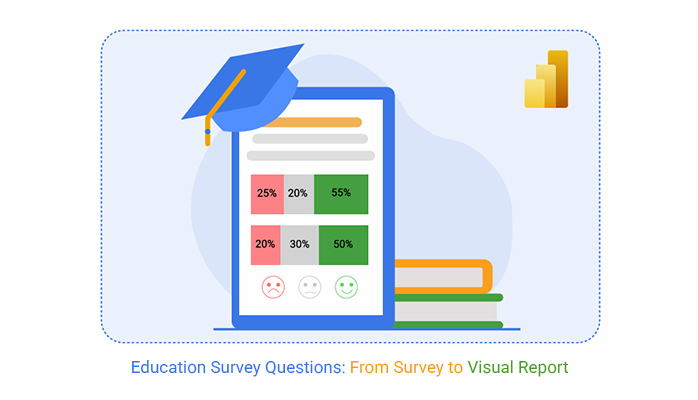
Students, families, and staff can point out friction that grades won’t show. Education Survey Questions also force choices to be backed by patterns, not hallway rumors. Done well, they turn real classroom moments into changes that stick, from pacing to program design.
Definition: Education Survey Questions are the prompts that collect feedback in schools. An education survey is a simple form that holds those prompts and checks teaching, learning, and operations. Done right, the results show what supports outcomes and what blocks them.
Students, parents, teachers, staff, and administrators can respond, depending on the goal. Digital tools keep the collection consistent and scalable. With clear wording and stable scales, results compare across grades and programs without extra cleanup. That saves time when reporting starts.
Education Survey Questions help schools hear from stakeholders and act. A Google survey works when questions drive decisions, not vanity.
Strong design also reduces survey bias, so responses reflect real experiences instead of leading wording. Education Survey Questions should stay neutral.
Timing matters. Educational surveys work best when people still remember what happened and still care enough to respond.
Good timing improves participation and the reliability of survey results.
Effective Education Survey Questions stay specific, stay plain, and cover the perspectives that matter for the decision at hand.
Examples keep answers consistent. Education Survey Questions should sound like real school moments, not policy talk, and stick to one idea.
Student items often target instruction clarity, engagement, and expectations. Teacher items look at strategies, constraints, and support needs. School climate items cover safety and how well communication works when problems show up.
Common question formats show up again and again:
Power BI turns responses into dashboards, so manual tallying doesn’t drag on.
With the data connected, reporting gets repeatable, and patterns start to show up fast.
Education Survey Questions in Power BI turn raw responses into trends worth acting on.
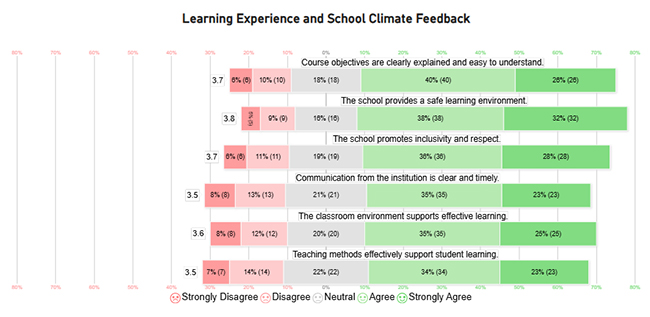
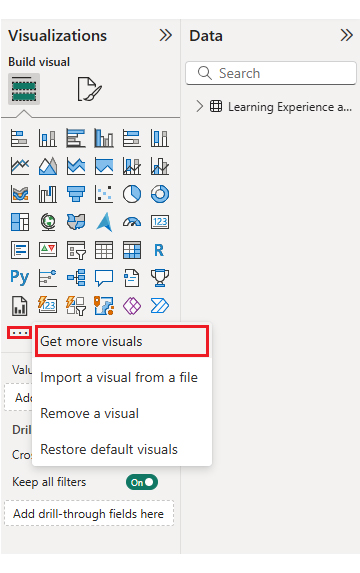
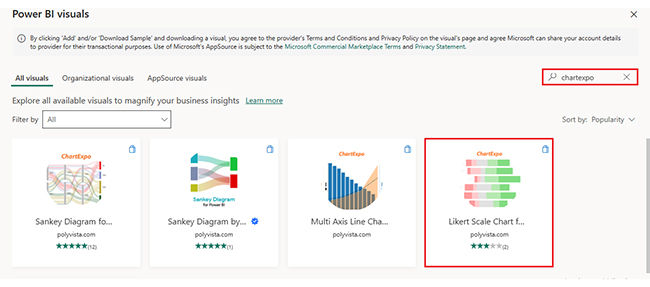
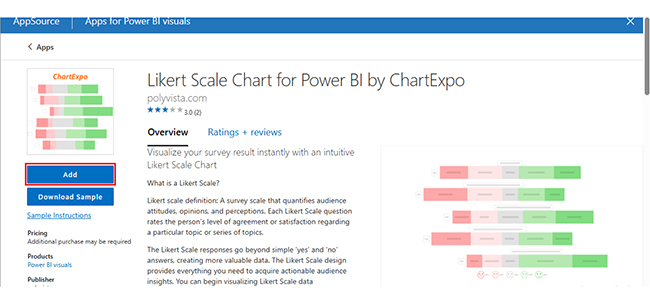
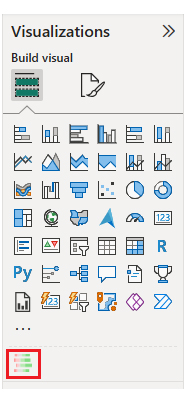
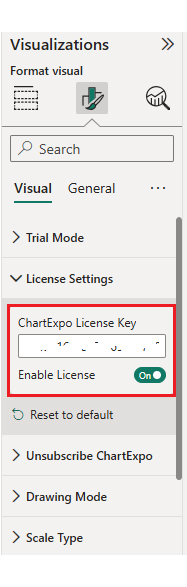
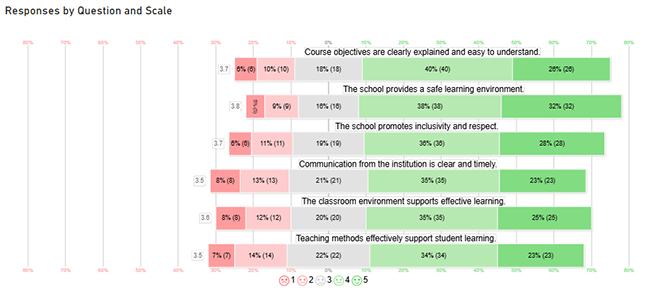
For better visuals, ChartExpo plugs into Power BI and adds survey-focused charts, including a 5-point or 4-point Likert scale for agreement data.
Why use ChartExpo?
Example:
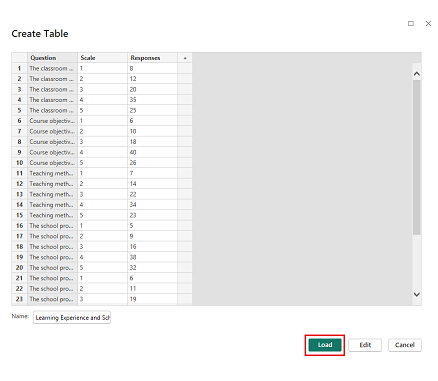
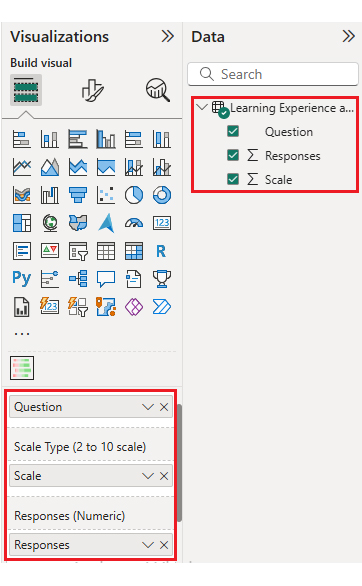
Assume the following table is available for building a Likert Chart.
|
Question |
Scale |
Responses |
| The classroom environment supports effective learning. | 1 | 8 |
| The classroom environment supports effective learning. | 2 | 12 |
| The classroom environment supports effective learning. | 3 | 20 |
| The classroom environment supports effective learning. | 4 | 35 |
| The classroom environment supports effective learning. | 5 | 25 |
| Course objectives are clearly explained and easy to understand. | 1 | 6 |
| Course objectives are clearly explained and easy to understand. | 2 | 10 |
| Course objectives are clearly explained and easy to understand. | 3 | 18 |
| Course objectives are clearly explained and easy to understand. | 4 | 40 |
| Course objectives are clearly explained and easy to understand. | 5 | 26 |
| Teaching methods effectively support student learning. | 1 | 7 |
| Teaching methods effectively support student learning. | 2 | 14 |
| Teaching methods effectively support student learning. | 3 | 22 |
| Teaching methods effectively support student learning. | 4 | 34 |
| Teaching methods effectively support student learning. | 5 | 23 |
| The school provides a safe learning environment. | 1 | 5 |
| The school provides a safe learning environment. | 2 | 9 |
| The school provides a safe learning environment. | 3 | 16 |
| The school provides a safe learning environment. | 4 | 38 |
| The school provides a safe learning environment. | 5 | 32 |
| Communication from the institution is clear and timely. | 1 | 8 |
| Communication from the institution is clear and timely. | 2 | 13 |
| Communication from the institution is clear and timely. | 3 | 21 |
| Communication from the institution is clear and timely. | 4 | 35 |
| Communication from the institution is clear and timely. | 5 | 23 |
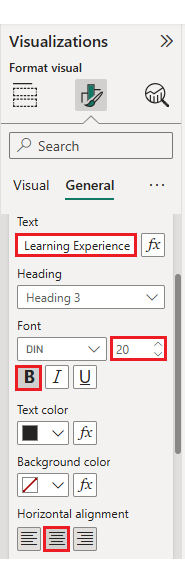
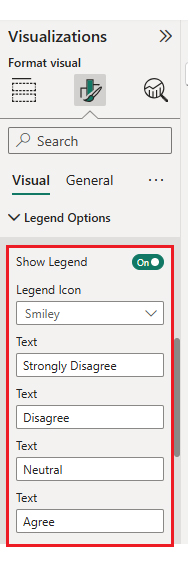
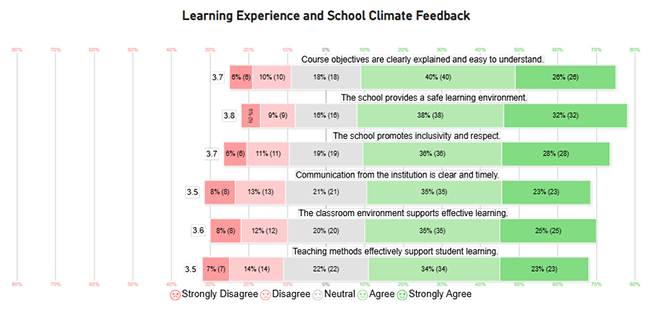
| Aspects | Likert Chart in Power BI | ChartExpo |
| Visualization focus | General BI visuals | Survey-focused visuals |
| Survey analysis | Manual setup for complex surveys | Simplified survey visualization |
| Likert scale support | Limited native support | Built-in Likert charts |
| Customization | High, technical | High, easy to configure |
| Interpretation | Standard metrics | Faster survey insights |
Educational surveys provide structured feedback for steady academic improvement today, and Education Survey Questions keep that feedback usable.
They work across different types of surveys used for academic assessment and feedback collection. These insights are especially useful when reviewing outcomes gathered through exit survey questions during program evaluation later.
Well-designed Education Survey Questions improve response quality, reduce noise, and keep analysis honest.
Education Survey Questions should mix closed-ended questions and a few open-ended prompts, so numbers still have context.
Students, parents, teachers, administrators, and support staff should be included so feedback reflects the full experience, not just one viewpoint.
Most schools run it at the end of a term or year, then add a shorter check after major changes so issues don’t linger for months.
Strong items cover clarity, engagement, communication, resources, and overall satisfaction, with wording that’s easy to answer quickly.
Education Survey Questions turn feedback into decisions that hold up. Power BI helps spot patterns and track changes, and ChartExpo makes Likert results readable fast. A clean education survey, built with care, keeps teams focused on fixes that matter, not noise. That’s how improvements stop being random.
How much did you enjoy this article?


Google Forms to Google Sheets keeps your data organized and current with every submission. Learn the steps, methods, and tips now!
Product survey questions reveal what customers truly think. Learn how to ask the right ones and act on the survey results. Read on!
Learn how the 5-Point Performance Rating Scale improves employee evaluations with clear, consistent, and fair performance reviews across teams.