Categories

It may seem sudden, but businesses everywhere are reevaluating how they measure success. SLA vs. KPI: Have you stopped to question which one drives real results?
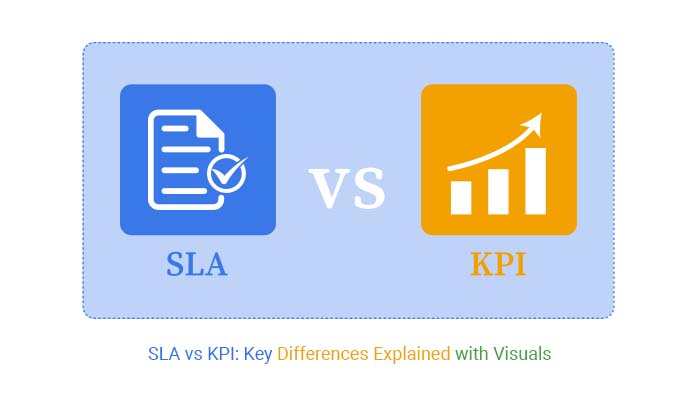


I’m here to help you demystify this. Companies depend on numbers to survive. Yet many leaders still confuse these terms, despite their decisions often depending on them. In 2024, 80% of organizations reported using metrics and KPIs to guide their strategy. However, only 46% felt confident in their ability to track them. That gap costs money, time, and trust.
Consider a support team that promises a two-hour response time. That’s an SLA. But measuring satisfaction scores after the interaction? That’s a KPI. Both are crucial, yet their roles differ. The gap between the two can decide whether customers stay or leave.
Visualization adds another layer. A messy spreadsheet won’t spark action. Decision-makers need clear visuals, whether reviewing business management KPIs or service agreements. That’s where tools like ChartExpo make an impact. Trends become visible, problems stand out, and teams move faster.
Every industry depends on this clarity. In healthcare, SLAs ensure timely patient care. In the tech industry, KPIs measure performance and growth. Even startups need structure to survive their first five years, where failure rates hover around 50%. Therefore, understanding SLA vs. KPI is no longer optional. It’s the line between growth and chaos.
This post will break it down. You’ll see differences, connections, and how visualization turns raw data into powerful insight.
Let’s get started…
Definition: SLA and KPI are tools that guide business performance. An SLA, or Service Level Agreement, sets clear promises between a provider and a client. It defines service quality, response times, and delivery standards.
A KPI, or Key Performance Indicator, measures progress toward goals. It tracks results and helps teams stay focused.
Together, SLAs and KPIs create structure and accountability. Many companies use KPI graphs to simplify data and spot trends quickly. Moreover, these tools apply to every sector, from customer success KPIs in tech to logistics and finance.
Clear SLAs and KPIs enhance trust, facilitate informed decision-making, and propel businesses toward measurable success.
Comparing KPIs vs. SLAs brings order. It helps leaders set realistic expectations and track real progress. Whether you run a startup or a global company, understanding this comparison can change how you plan, deliver, and grow. Here are some reasons why it matters:
Many teams mix up SLAs and KPIs. This mistake leads to missed opportunities and confusion. Both are essential, but their purposes differ. From KPIs for accounting to tech support, clear definitions keep everyone on the same page.
Here is a table to break it down:
| Aspect | SLA (Service Level Agreement) | KPI (Key Performance Indicator) |
| Purpose | Defines service expectations between parties. | Measures progress toward goals. |
| Focus | Commitments on service quality and delivery. | Performance and outcomes. |
| Example | Reply to all client emails within two hours. | Achieve 90% invoice accuracy rate. |
| Industry Use | Service contracts and client agreements. | Metrics for teams using retail industry KPIs and finance. |
| Measurement | Pass or fail against set standards. | Numeric tracking and performance trends. |
| Timeframe | Often fixed and tied to contracts. | Flexible and adjusted with business needs. |
| Impact | Builds trust and ensures reliability. | Drives improvement and motivates growth. |
Many see SLAs and KPIs as completely different items. Sure, they are, but they share powerful similarities that drive results. Whether tracking KPIs for safety in manufacturing or using smart KPIs in marketing, these tools bring structure. They simplify goals and create a path to measurable success.
Here is what they have in common:
SLAs and KPIs are deeply connected. One sets expectations, the other measures how well those expectations are met. Together, they create a cycle of accountability and growth. This connection applies to every sector, from tech support to finance. Here are four scenarios that show their relationship in action:
Businesses use these tools every day to set standards and measure progress. SLAs define service commitments, while KPIs track results. Together, they create accountability and growth. Here are simple scenarios to illustrate their use:
Spreadsheets can tell a story, but sometimes Excel makes it feel like solving a puzzle with missing pieces. Analyzing SLA vs. KPI in Excel can quickly become messy. Endless rows and columns make spotting trends a chore.
Don’t worry. Data visualization is the game-changer here. Clear visuals turn numbers into insights that drive action.
Yet, Excel charts often lack the depth and clarity teams need. And that is where ChartExpo steps in. This tool simplifies complex data and creates visuals that speak louder than raw numbers. With it, analyzing SLAs and KPIs becomes faster, smarter, and far more effective.
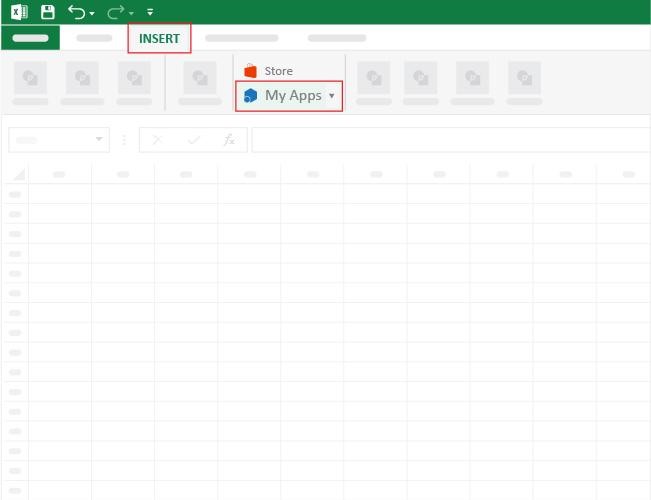
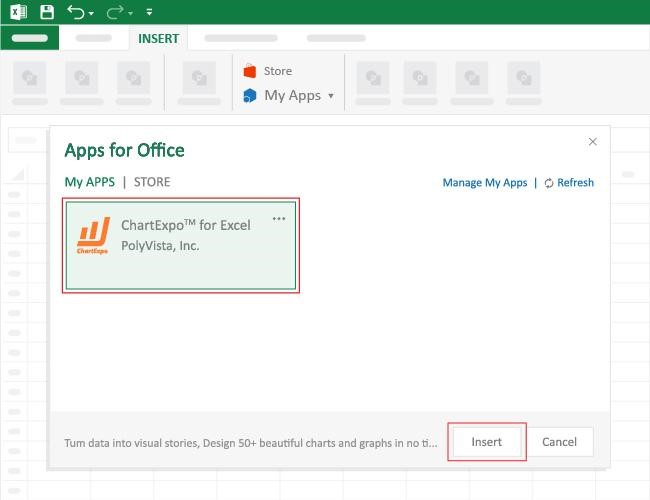
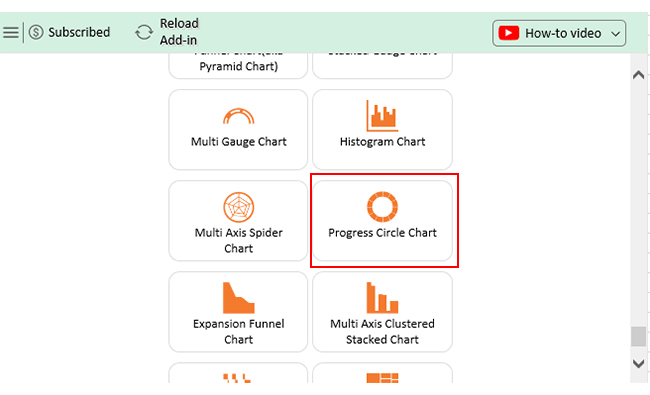
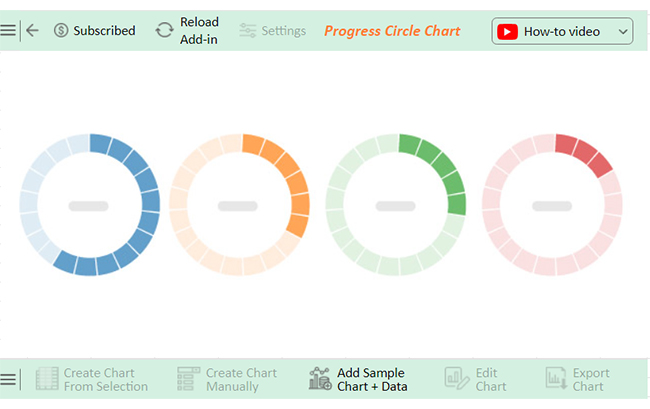
How to Install ChartExpo in Excel?
ChartExpo charts are available both in Google Sheets and Microsoft Excel. Please use the following CTAs to install the tool of your choice and create beautiful visualizations with a few clicks in your favorite tool.
Let’s analyze the data below and glean insights from the visualization we create.
| Metric | Value (%) |
| Resolution SLA | 90 |
| CSAT KPI | 80 |
| Uptime SLA | 97 |
| FCR KPI | 72 |
| Delivery SLA | 96 |
| Productivity KPI | 83 |
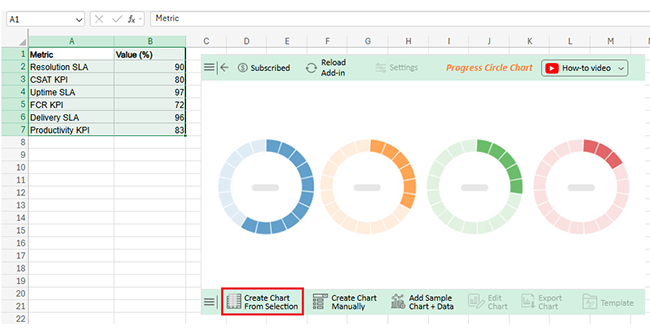
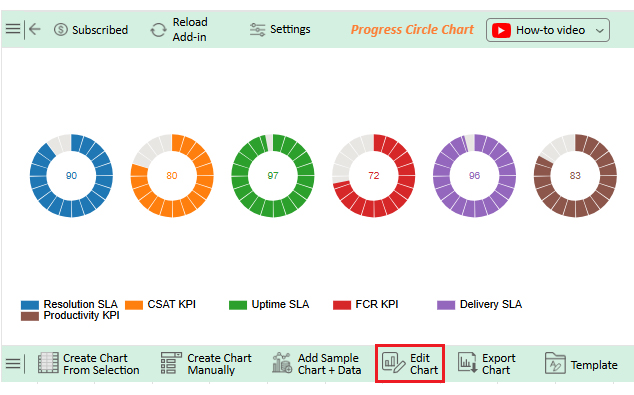
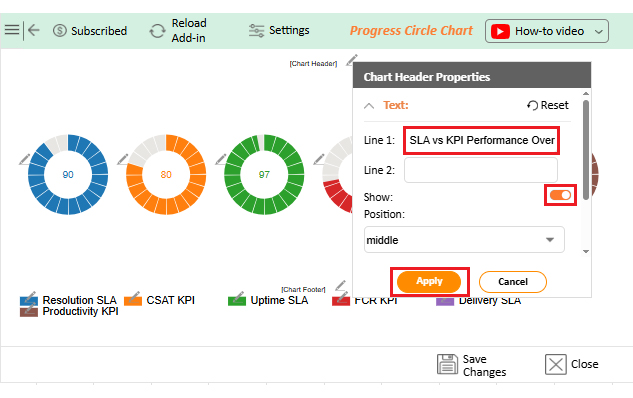
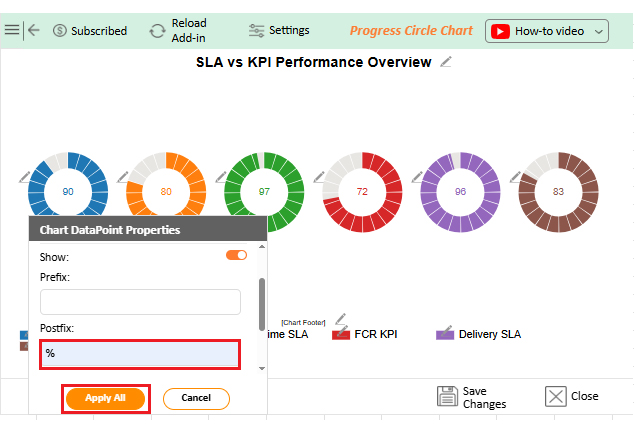
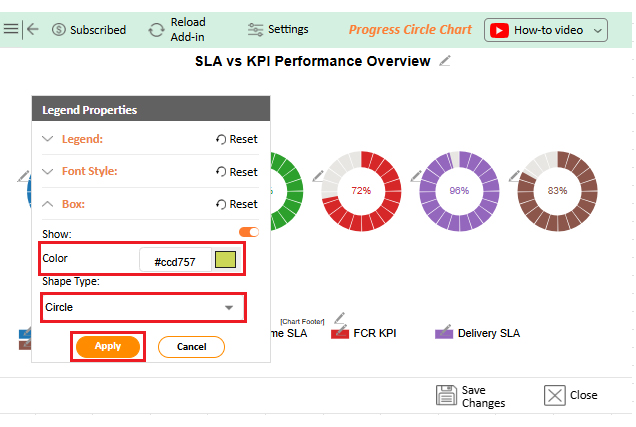
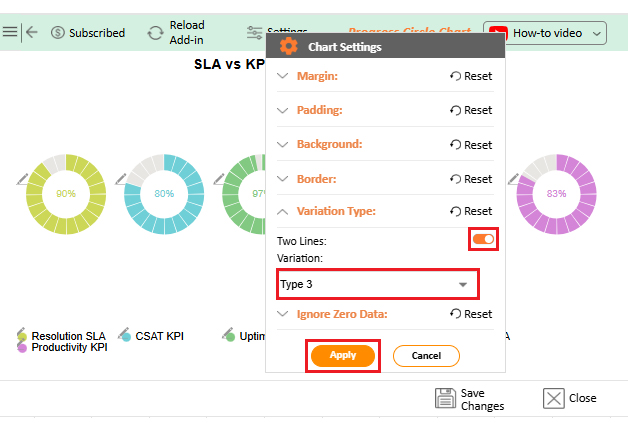
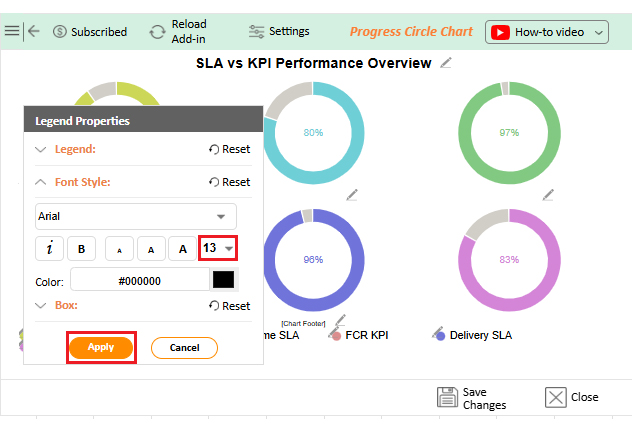
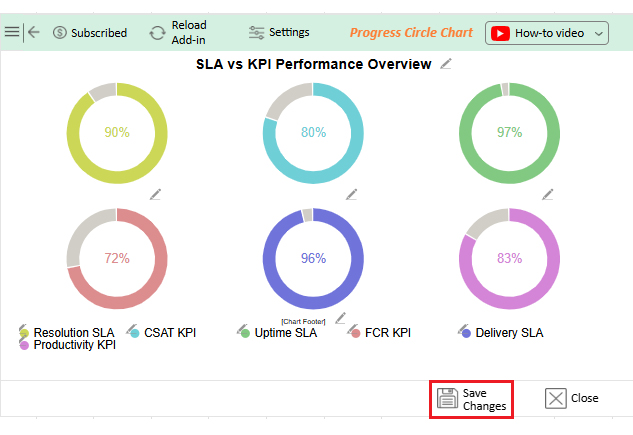
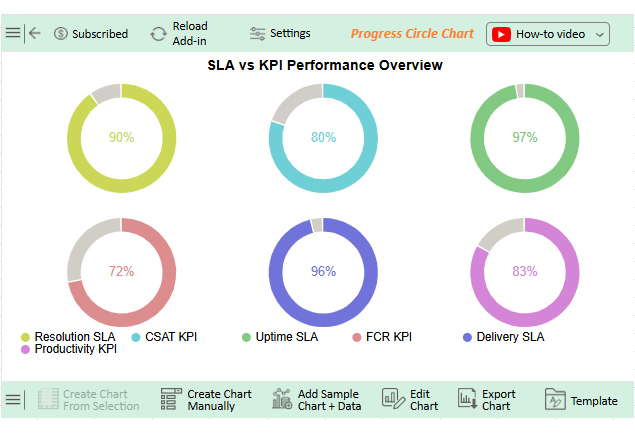


Clear goals are the foundation of strong performance. SLAs and KPIs provide the structure to make those goals actionable. They keep teams accountable, guide service improvements, and help leaders make smarter choices. Companies that embrace them often see happier customers and better business outcomes.
Here’s why they’re essential:
Talking about measuring performance is easy. Putting it into practice is where things get tricky. SLAs and KPIs can guide your team, but only if they’re applied thoughtfully. Done right, they drive progress. Done poorly, they create confusion. To make them work for you, follow these best practices for getting the most out of SLA vs. KPI:
KPIs can inform SLAs, but they are not the same. Metrics from KPIs can set realistic service targets. By using performance data, organizations can define commitments that turn measurable outcomes into clear SLAs for teams and clients.
SLA, KPI, and SLO are related but different. An SLA sets service commitments, whereas a KPI measures performance toward goals. An SLO defines specific targets within an SLA. Together, they track, measure, and ensure service quality effectively.
Mastering SLA vs. KPI is essential for any business seeking clear results. Understanding their differences and similarities creates focus. It helps teams know what to deliver and how to measure success.
SLAs set promises. KPIs track performance. Both guide decision-making and improve accountability. Using examples makes the concepts easy to grasp. IT support, logistics, and cloud services show how SLAs define service. Employee performance, safety, and accounting KPIs demonstrate measurable outcomes. Seeing these examples helps teams apply them in real situations.
Data alone is not enough. Visualization turns numbers into insights. Charts and graphs reveal trends that spreadsheets hide. Teams can act faster and make smarter decisions when they clearly see the data.
Excel has limitations. Its charts are basic and often fail to show complex relationships. This is where ChartExpo makes a difference. It creates visuals that are easy to understand and use. Patterns and gaps become clear immediately.
So, do not hesitate.
Start using ChartExpo today. Install it and transform how you analyze SLA vs KPI. With the right approach, you can measure success confidently and grow smarter.
How much did you enjoy this article?


Calculate accounts receivable turnover ratio to measure credit collection speed, improve cash flow, and strengthen your financial strategy. Read on!
Change Management KPIs are the key to tracking adoption, performance, and ROI during transitions. Find out which metrics matter. Read on!
Data collection methods and techniques determine the quality of every insight you act on. Explore key approaches for gathering reliable data. Read on!