Categories

Every organization faces a moment when effort and outcome stop matching. Resources get committed, initiatives get launched, and yet persistent gaps remain.
A need analysis template brings discipline to that disconnect. It converts informal observations into structured data, giving decision-makers a clear view of where they stand, where they want to go, and what separates the two.
In data-driven environments, that clarity is not optional. A training needs analysis template helps teams move past guesswork, build evaluations around measurable criteria, and direct resources toward interventions that actually close performance gaps. The result is planning grounded in evidence rather than assumption.
Definition: A need analysis template is a systematic tool for comparing where performance currently stands against where it needs to be. Decision-makers use it to move from loosely interpreted problems to structured, evidence-based evaluations.
Organizing observations, priorities, and metrics into one coherent model prevents fragmented conclusions and supports more targeted action.
Applied across training, operations, and business planning, a needs assessment template typically documents current conditions, desired outcomes, performance indicators, and next steps.
This structured approach keeps evaluations consistent and helps teams arrive at conclusions that are reproducible, not coincidental.
Without a consistent framework, evaluations drift toward whatever a team already believes. A need analysis template removes that bias by imposing repeatable logic on every assessment.
It gives stakeholders a shared language for describing problems and a standardized method for comparing potential responses. Key reasons this matters:
A need analysis template works best when it guides thinking rather than complicating it. Effective templates balance simplicity with depth, giving evaluators enough structure to stay consistent without so much rigidity that they miss context-specific nuances. The core components include:
No two evaluation contexts are identical, and a well-designed template reflects that reality. Each variation below targets a distinct set of decision variables and addresses specific analytical objectives within its domain.
Concrete examples show how structured gap evaluation transforms observation into insight. The five scenarios below each highlight a different dimension of need analysis, from root cause concentration to departmental execution tracking.
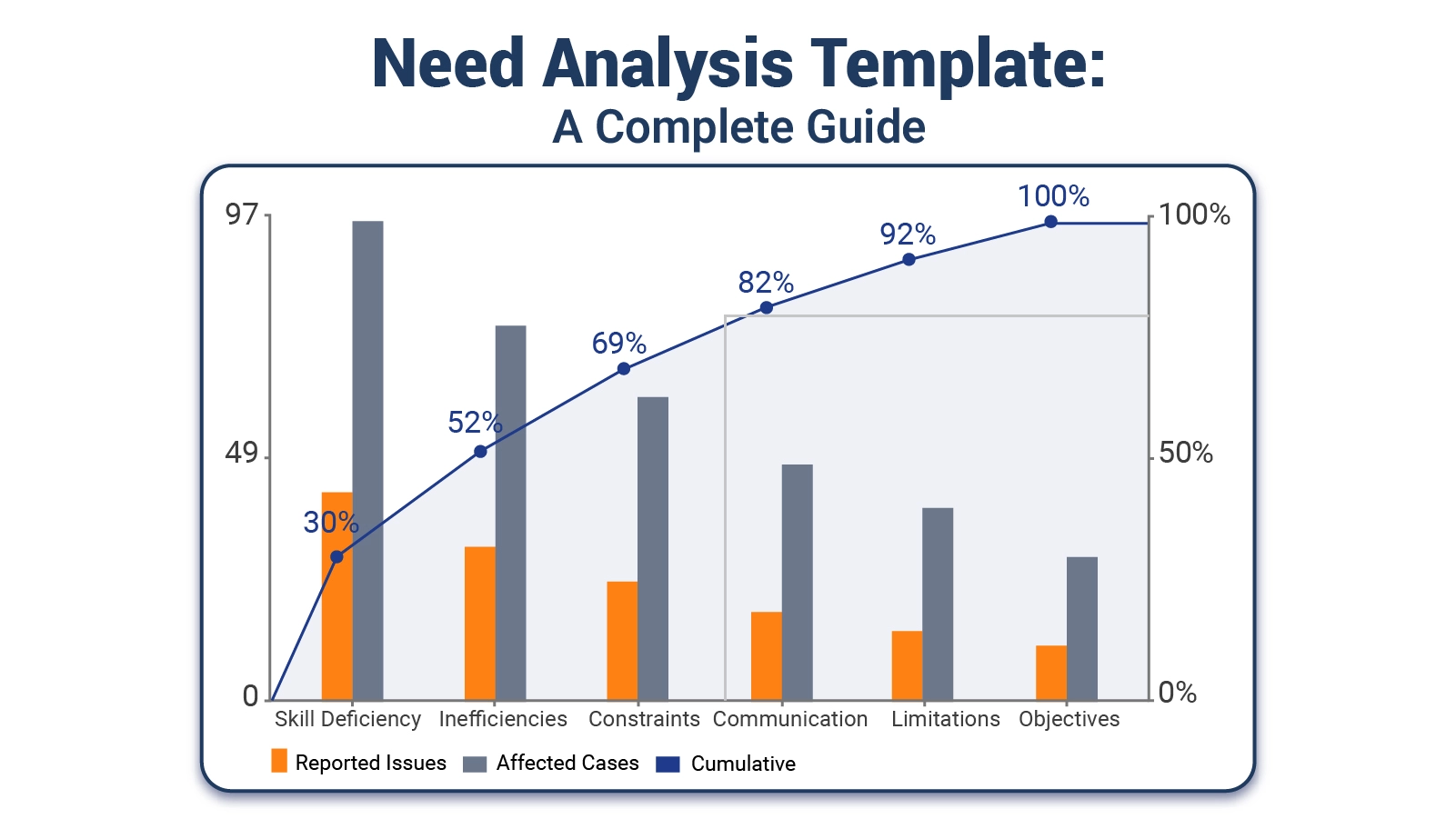
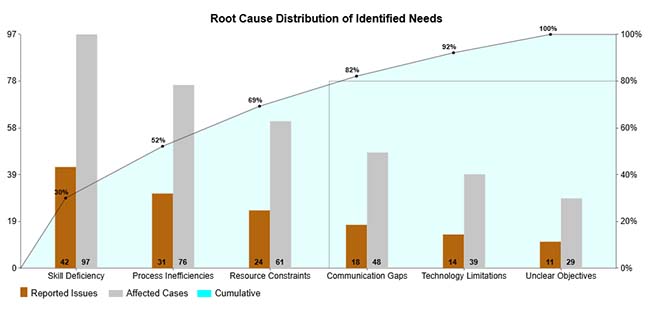
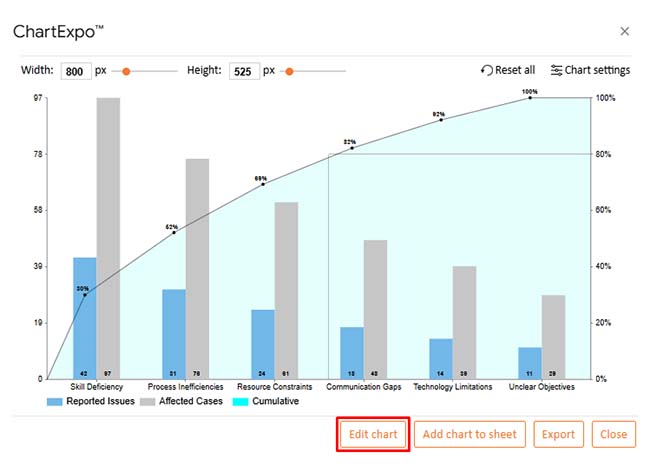
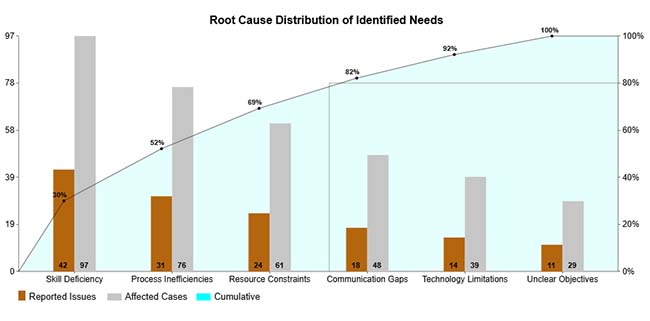
This chart concentrates roughly two-thirds of all reported issues and affected cases within just two categories: skill deficiency and process inefficiencies. The Pareto pattern is unmistakable, pointing directly toward where intervention will produce the greatest reduction in need.
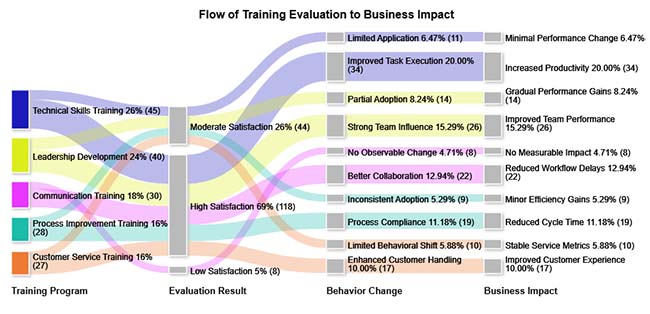
Satisfaction scores at the end of a training program rarely predict whether participants change their behavior or whether the organization sees measurable improvement. This example traces the full chain from evaluation to impact, revealing where that chain typically breaks.
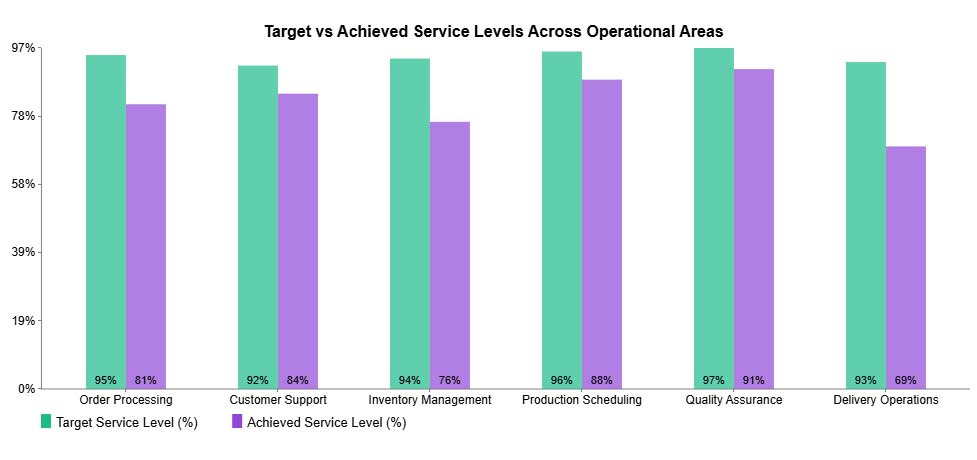
Comparing targets against actual performance across operational areas makes shortfalls visible in precise terms. Delivery Operations and Inventory Management show the widest gaps in this example, flagging them as the highest-priority areas for corrective focus.
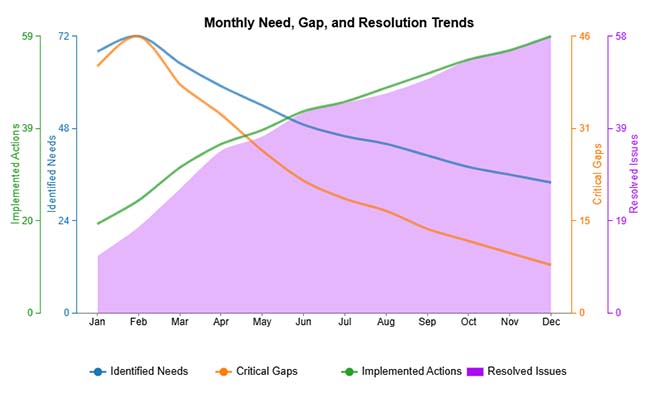
Tracking needs, gaps, and resolutions over consecutive months produces a performance trajectory. When implemented actions rise, identified needs and critical gaps contract while resolved issues climb, confirming that structured intervention is producing measurable progress.
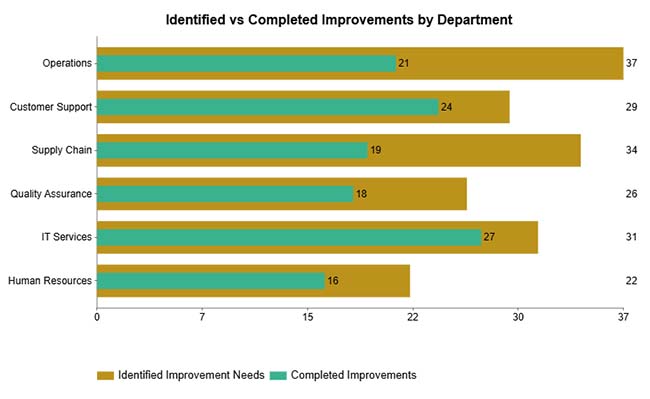
Plotting identified improvements against completed ones by department exposes execution backlogs with precision. Operations and Supply Chain carry the heaviest unresolved load in this example, signaling where accountability and capacity attention are most urgently required.
A need analysis template, when used within a training context, keeps every step tied to a specific learning objective rather than general improvement ambitions. The following process channels evaluation energy toward outcomes that are both measurable and actionable.
Spreadsheet tools give structured evaluation frameworks a dynamic workspace where raw inputs become comparable, scorable, and reportable. Moving evaluation work into Google Sheets adds consistency to scoring and opens the door to analysis techniques that static documents cannot support.
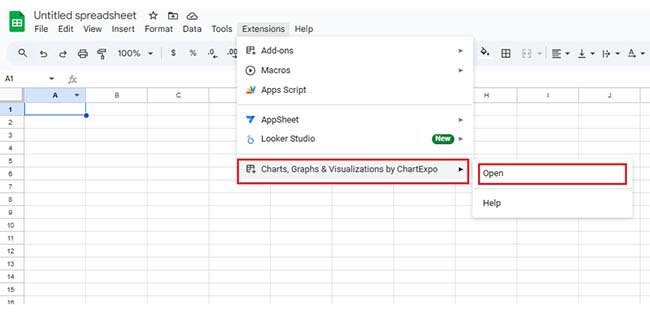
Charting tools extend this process further by converting structured datasets into visuals that are immediately readable by any stakeholder. ChartExpo integrates directly with Google Sheets to handle that conversion without requiring custom code or manual formatting work.
Why use ChartExpo?
How to install ChartExpo in Google Sheets?
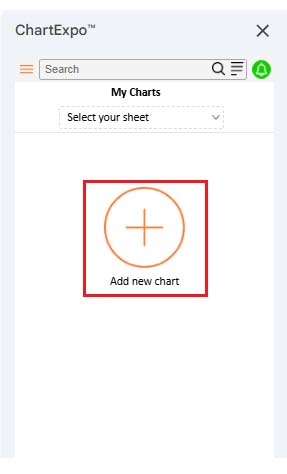
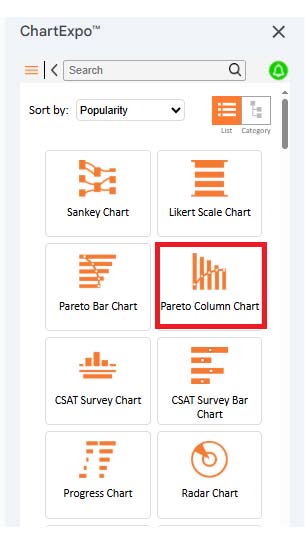
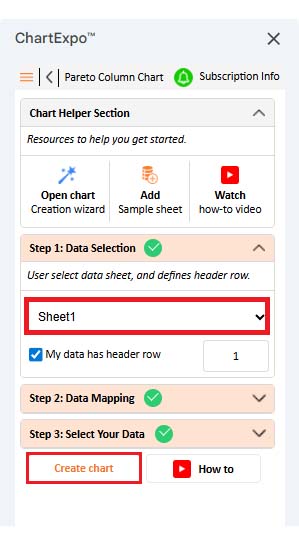
Consider we have the following data for a Pareto Column Chart.
|
Root Cause Category |
Reported Issues |
Affected Cases |
| Skill Deficiency | 42 | 97 |
| Process Inefficiencies | 31 | 76 |
| Resource Constraints | 24 | 61 |
| Communication Gaps | 18 | 48 |
| Technology Limitations | 14 | 39 |
| Unclear Objectives | 11 | 29 |
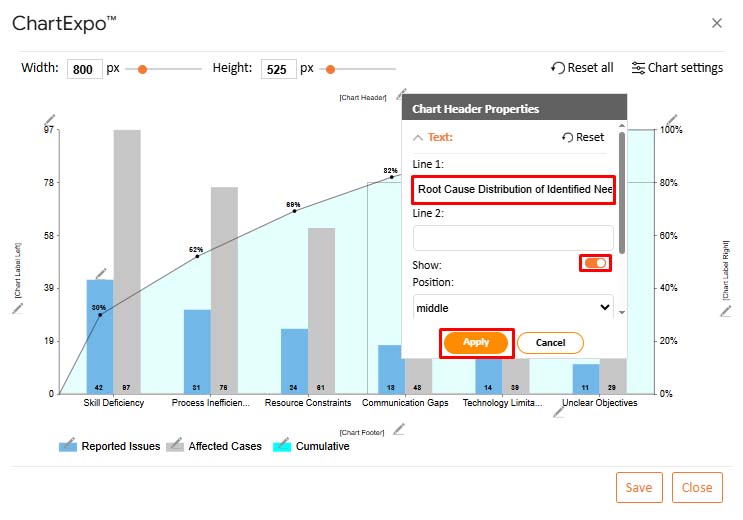
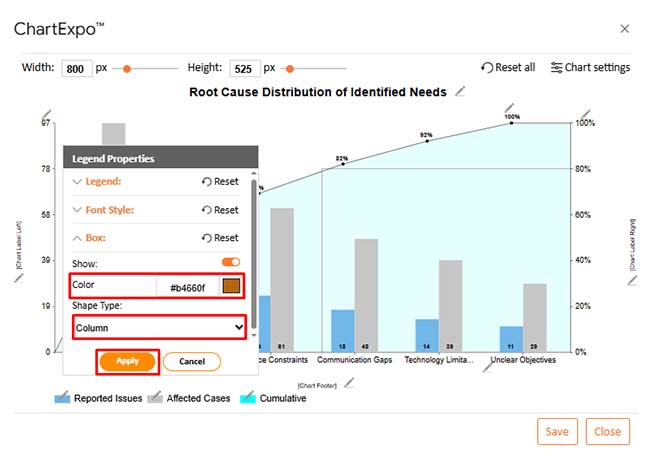
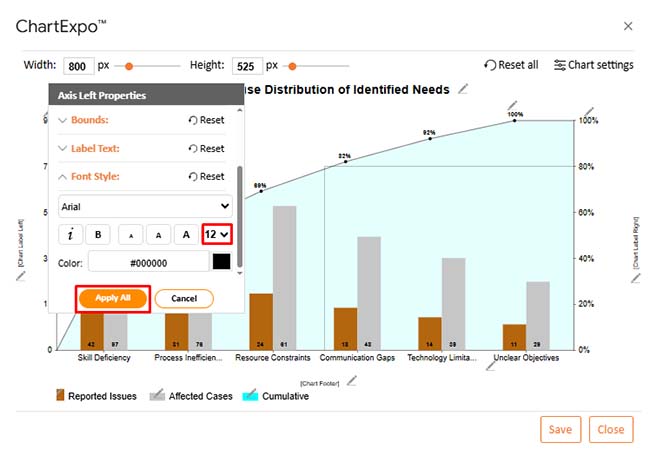
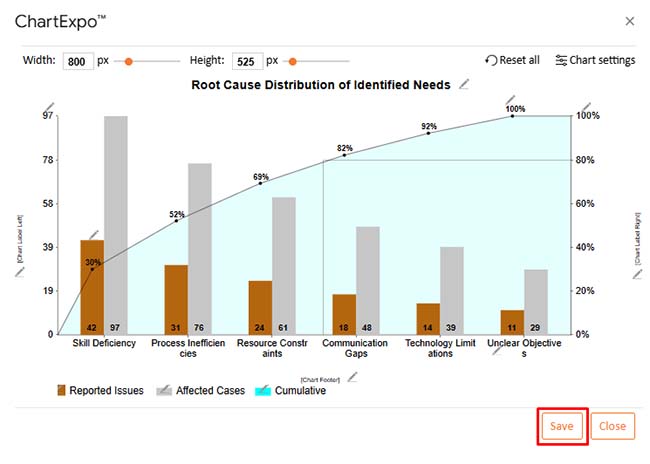
Consistent structure transforms evaluation from a one-time activity into a repeatable practice. A need analysis template raises the quality of every assessment it governs by removing ambiguity from the process and giving stakeholders a shared reference point.
This framework delivers its full value only when applied with discipline. Adopting the practices below keeps evaluations sharp, credible, and aligned with the decisions they are meant to inform.
Start by defining the objective, then document the current state and establish the desired outcome. From there, measure the gap between the two and identify what it will take to close it. Credible data, clearly stated criteria, and conclusions that point directly to action are what separate a useful needs analysis from a description of problems.
The five steps are defining goals, assessing the current situation, establishing the desired state, identifying gaps, and recommending actions. Working through them in sequence produces an evaluation that is both logically complete and directly tied to evidence.
A good needs analysis is built on verifiable data, applies consistent evaluation criteria throughout, and connects every finding to a practical next step. It avoids assumptions, stays focused on measurable outcomes, and produces conclusions that a decision-maker can act on with confidence.
A need analysis template changes how organizations make decisions. By replacing assumptions with structured measurement, it gives every evaluation a consistent starting point and a defensible path to action. Teams that use one regularly spend less time debating priorities and more time closing the gaps that actually produce measurable results.
When paired with analytical tools and visualization platforms, the findings become sharper and faster to communicate across teams. Planning improves, resource allocation becomes more precise, and improvement initiatives stay connected to evidence from start to finish. The structured approach makes better outcomes repeatable and defensible, not coincidental.
How much did you enjoy this article?



Calculate accounts receivable turnover ratio to measure credit collection speed, improve cash flow, and strengthen your financial strategy. Read on!
Change Management KPIs are the key to tracking adoption, performance, and ROI during transitions. Find out which metrics matter. Read on!
Data collection methods and techniques determine the quality of every insight you act on. Explore key approaches for gathering reliable data. Read on!