Categories

It may feel sudden, or perhaps you saw it coming months ago, but equity ownership moves quickly.
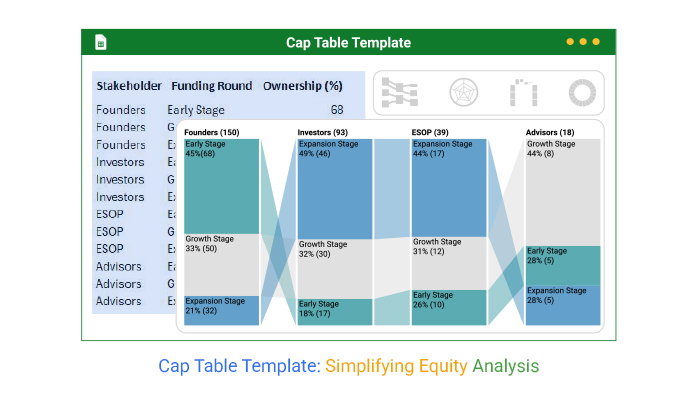


Cap table template: why do so many founders, CFOs, and investors rely on it to stay clear? It tracks ownership changes, maintains transparency, and prevents costly errors. Startups grow, rounds accumulate, and suddenly there are dozens of stakeholders with shifting ownership percentages. Without structure, mistakes burn trust and cost millions.
In 2023, global venture capital funding hit over $285 billion. That means thousands of founders had to track who owns what, and how each new investment reshaped their company. A spreadsheet without order cannot keep up. And that’s where a cap table template comes into play. It brings order to the chaos, making it easier to spot trends and prepare reports on financial analysis.
Equity is more than numbers. It’s a story of risk, reward, and long-term value. Investors seek transparent ownership, while employees want their share protected. Founders want control, even as their ownership is diluted. This balance is delicate. The right cap table template gives all parties a clear view, accurate records, and supports rapid, data-driven decisions.
Think of it as a living ownership map. Add an investor, issue options, or adjust valuations—the record updates instantly. Cap table templates save time, prevent errors, and give you confidence when sharing ownership data. Combined with data analysis, it’s more than a spreadsheet. It becomes a decision tool that shapes growth with precision. The choice is clear: manage equity or be managed.
Let`s dive in.
Definition: A cap table template offers a clear way to track equity ownership and dilution as funding grows. It lists shareholders, percentages, and option pools all in one place. Founders often combine it with financial metrics to see the impact of each round. Teams updates it quickly, and everyone sees every change in real time.
This approach makes investor conversations smoother and gives teams the confidence they need to succeed. A well-structured template supports data-driven decision-making, ensuring teams base their choices on facts, not guesses. Ultimately, it maintains equity transparency, facilitates easy management, and aligns with long-term company goals.
Growth creates opportunities, but it also creates layers of complexity. Each new round of funding shifts ownership, and without order, mistakes creep in. A capitalization table template in Google Sheets solves this by keeping records accurate, transparent, and easy to manage. It provides founders, investors, and employees with a single, accurate version of the truth.
Here are the importances:
Startups evolve fast, and ownership shifts with every new investor. Capital table templates track these changes and support precise planning. They also structure key discussions with investors, employees, and advisors. Using Google Finance in Google Sheets provides valuable context for informed decisions.
I believe these cap table template examples will inspire you:
A cap table in Google Sheets brings ownership data to life in a dynamic and accessible way. Imagine each row telling the story of a shareholder and their shares, with percentages that update automatically as your team grows. Founders see dilution play out in real time as each funding round unfolds.
Investors can instantly check their stake. No more confusion, just clarity. Add financial metrics, and you get a complete picture that connects ownership changes with company performance.
Need to plan? The sheet easily grows to include option pools, valuations, and what-if scenarios. Simple formulas ensure accuracy and transparency, making equity management accessible and reliable for long-term success.
Building a cap table is more than filling cells. It creates a record of ownership that grows with your company. Google Sheets lets you connect numbers to insights, test scenarios, and compare growth with tools like a market capitalization chart. A structured template helps manage dilution and shows the story of each funding round.
Here are the steps on how to create a cap table template:
Data is easier to trust when it is clear and visual. With ChartExpo in Google Sheets, equity shifts become simple to understand. Its charts, illustrated by the examples below, help founders, investors, and employees see ownership at a glance:
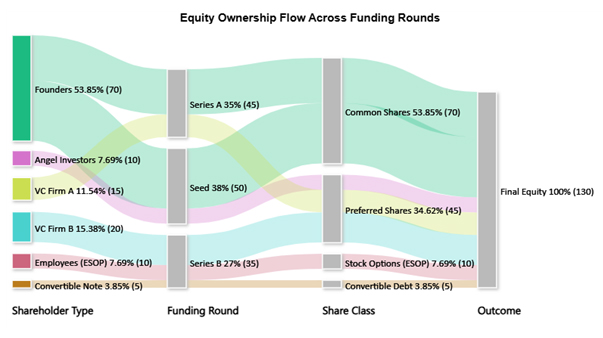
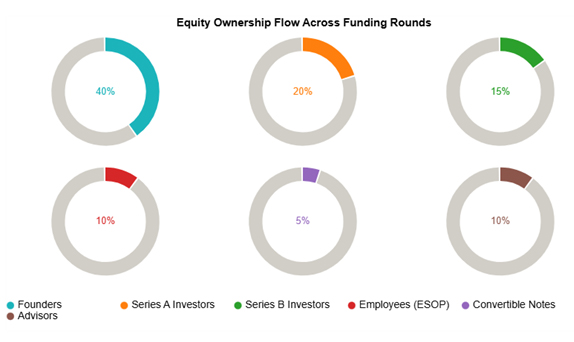
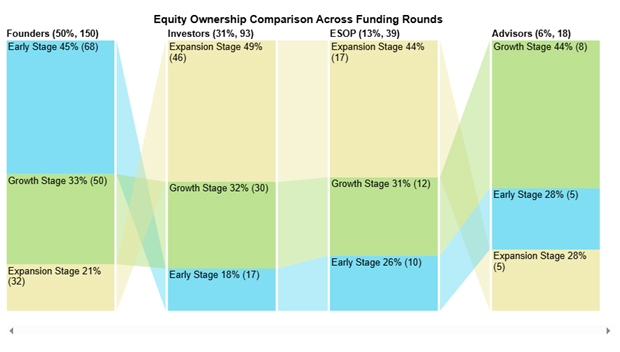
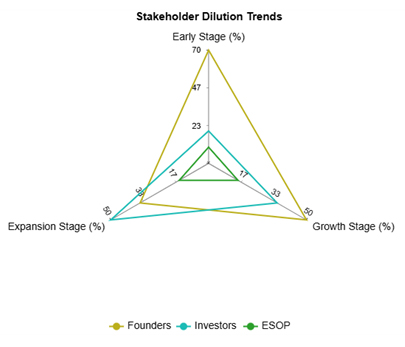
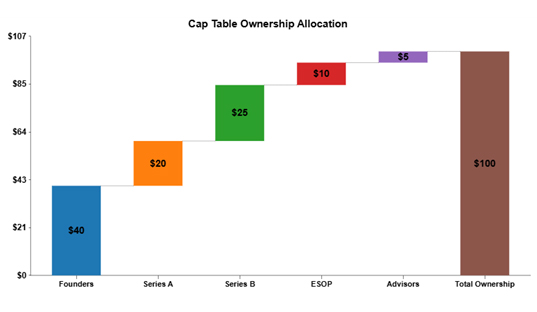
Equity can easily be overlooked if not tracked carefully. That is why using a cap table template to track equity ownership and dilution with ease is important. However, rows and columns only offer part of the picture. Data becomes powerful when it is visualized, not just read.
Visualization is central to data analysis, yet Google Sheets can sometimes fall short. Basic charts provide limited insight and can oversimplify ownership structures. ChartExpo addresses this by transforming raw data into visuals that are clear, insightful, and actionable.
Take control of your equity data—try ChartExpo today and unlock insights that matter.
How to Install ChartExpo in Google Sheets?
ChartExpo charts are available both in Google Sheets and Microsoft Excel. Please use the following CTAs to install the tool of your choice and create beautiful visualizations in a few clicks in your favorite tool.
Let’s analyze the cap table template sample data in Google Sheets using ChartExpo.
| Stakeholder | Funding Round | Ownership (%) |
| Founders | Early Stage | 68 |
| Founders | Growth Stage | 50 |
| Founders | Expansion Stage | 32 |
| Investors | Early Stage | 17 |
| Investors | Growth Stage | 30 |
| Investors | Expansion Stage | 46 |
| ESOP | Early Stage | 10 |
| ESOP | Growth Stage | 12 |
| ESOP | Expansion Stage | 17 |
| Advisors | Early Stage | 5 |
| Advisors | Growth Stage | 8 |
| Advisors | Expansion Stage | 5 |
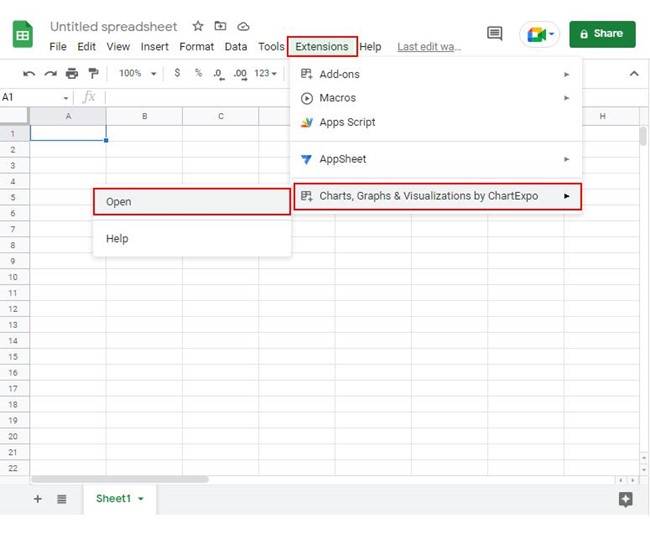
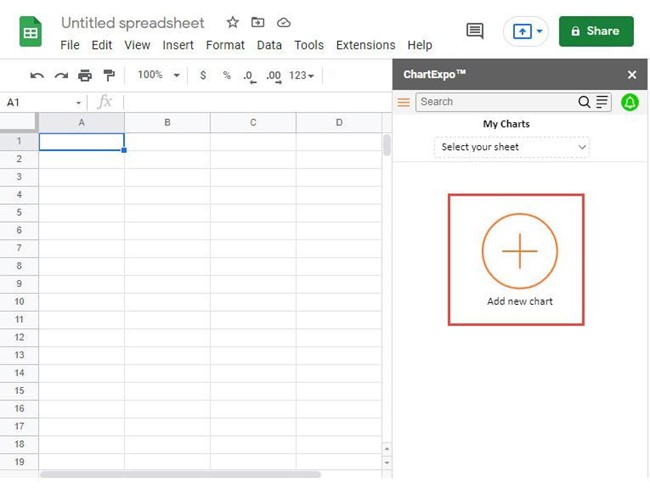
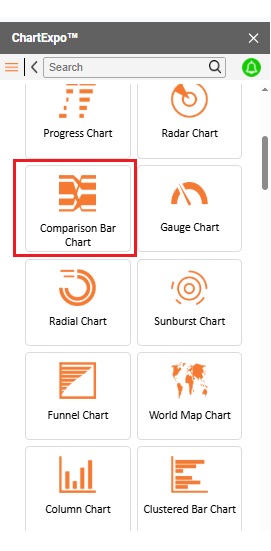
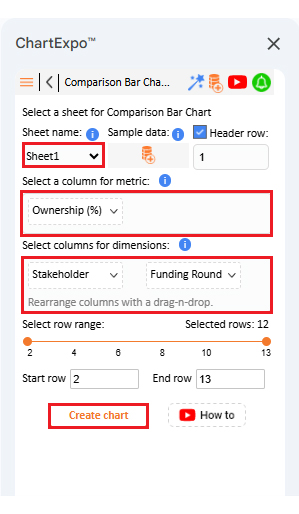
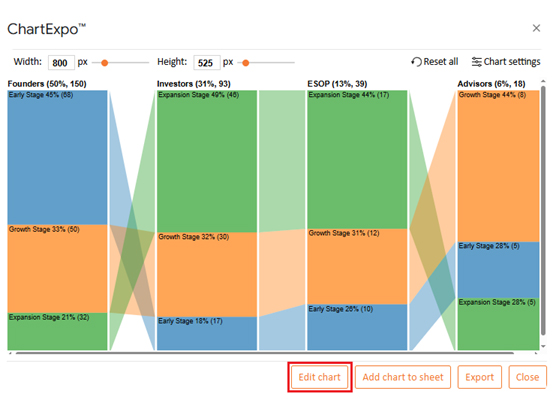
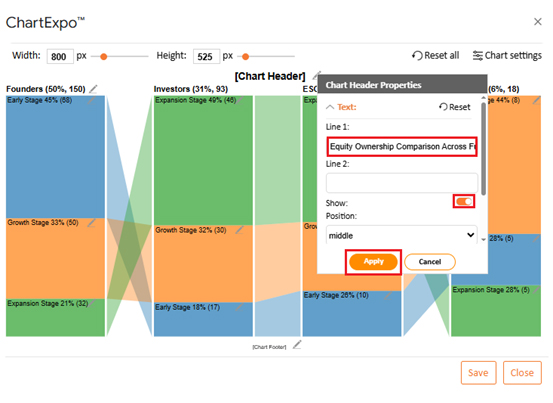
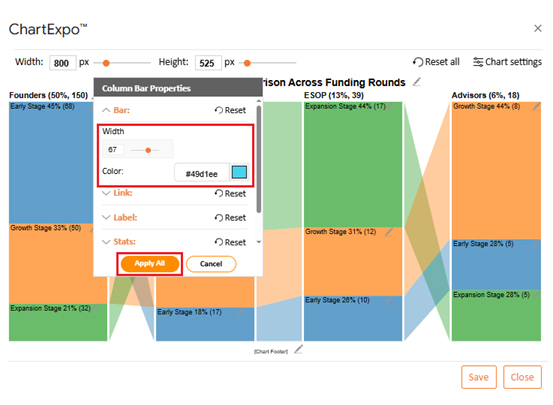
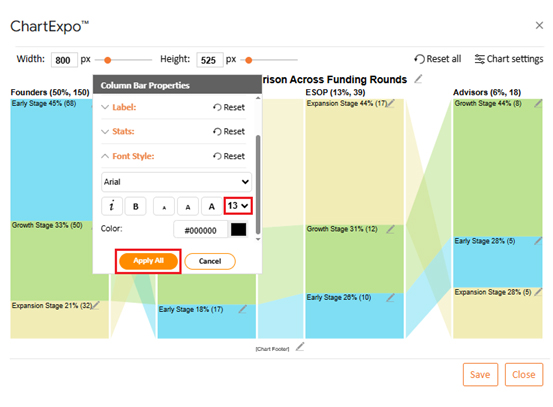
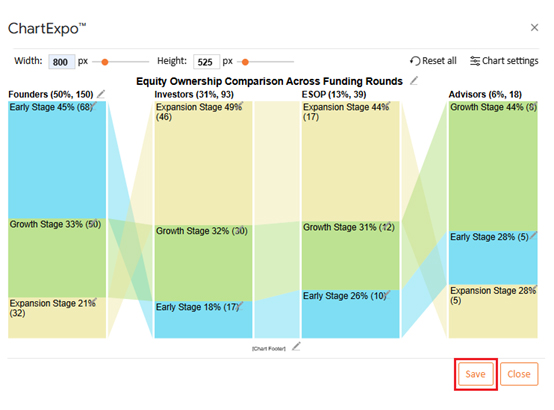
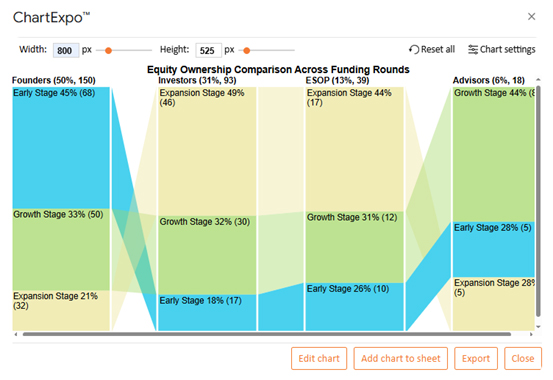
Equity is more than numbers. It reflects who built, believed in, and grew the company. A cap table spreadsheet keeps this story clear, simple, and shareable, turning scattered data into a tool for smarter decisions.
How?
Equity has many moving parts, and each stakeholder views it differently. A capitalization table template in Google Sheets adapts to those perspectives, giving clarity. It keeps ownership transparent, numbers accurate, and decisions smarter.
Here are some use cases to help you sink this information in:
A cap table shows ownership, shares, and dilution. A balance sheet shows assets, liabilities, and the value of equity. The cap table tracks ownership, whereas the balance sheet tracks what the company owns and owes.
A cap table strategy is the plan for managing equity ownership. It helps founders control dilution and align stakeholders. The strategy includes setting option pools, planning fundraising rounds, and using data-driven decision-making to protect long-term value.
Equity guides every company’s journey. It determines who holds control, shares risk, and benefits from rewards. A cap table template tracks equity ownership and dilution with ease, making this process clear and measurable.
Clarity is the biggest advantage. Founders, employees, and investors all gain a single version of the truth. This transparency fosters trust and prevents confusion as ownership transitions through various funding stages.
Growth introduces new complexities. Each funding round shifts equity and introduces dilution. A cap table enables you to anticipate these changes, thereby preventing unexpected outcomes. It is a tool that supports informed planning.
Cap tables offer more than a record of ownership. They enable financial insights, such as comparing equity outcomes with fixed income strategies. You can also link values to a market capitalization chart for a broader company perspective.
Cap tables also work well in conjunction with a more comprehensive financial review. Leaders can analyze financial statements in conjunction with equity changes. This shows not only who owns the company but also how ownership links to its health and growth.
The future of equity management is visual. Traditional tables no longer suffice. ChartExpo enhances ownership visibility with clear, impactful visuals.
So, do not hesitate. Install ChartExpo to transform your cap table into a tool for clarity, trust, and growth.
How much did you enjoy this article?


Calculate accounts receivable turnover ratio to measure credit collection speed, improve cash flow, and strengthen your financial strategy. Read on!
Change Management KPIs are the key to tracking adoption, performance, and ROI during transitions. Find out which metrics matter. Read on!
Data collection methods and techniques determine the quality of every insight you act on. Explore key approaches for gathering reliable data. Read on!