Categories

Structured hiring processes separate thriving organizations from those that struggle to retain talent. A staff onboarding template turns the chaotic first days of employment into a guided, repeatable experience that benefits both the organization and the new hire.
When employees receive clear direction from the start, they reach full productivity faster and feel connected to the team.
This post covers what a staff onboarding template is, why it matters, what components define an effective one, and how to build and evaluate it using modern spreadsheet tools. Read on to see how a simple framework can become one of your most valuable HR assets.
Definition: A staff onboarding template is a pre-built framework that guides HR teams and managers through every step required to integrate a new hire into the organization. It consolidates tasks, timelines, documentation requirements, training schedules, and role-specific expectations into a single reference point.
Rather than managing onboarding ad hoc, teams use these templates to deliver a consistent experience for every person who joins.
A well-designed new employee onboarding template removes ambiguity for both managers and employees. It provides operational clarity by mapping what needs to happen, when it needs to happen, and who is responsible.
This reduces administrative friction, supports compliance, and ensures that strategic priorities are communicated to new team members from their first day on the job.
Without a defined process, onboarding varies widely from one hire to the next. A structured framework closes that gap and delivers measurable results across the organization.
A useful template covers more than just a task checklist. The components below define what separates a template that drives results from one that collects dust.
Organizations differ in size, structure, and workforce makeup, so a single template design rarely fits every context. Choosing a format that maps to the stages of the hiring process specific to your team makes adoption far more likely and outcomes more measurable.
Seeing real workforce data organized within a staff orientation template makes the abstract concept concrete. The examples below illustrate how common HR metrics appear when captured and visualized through a well-built onboarding process.
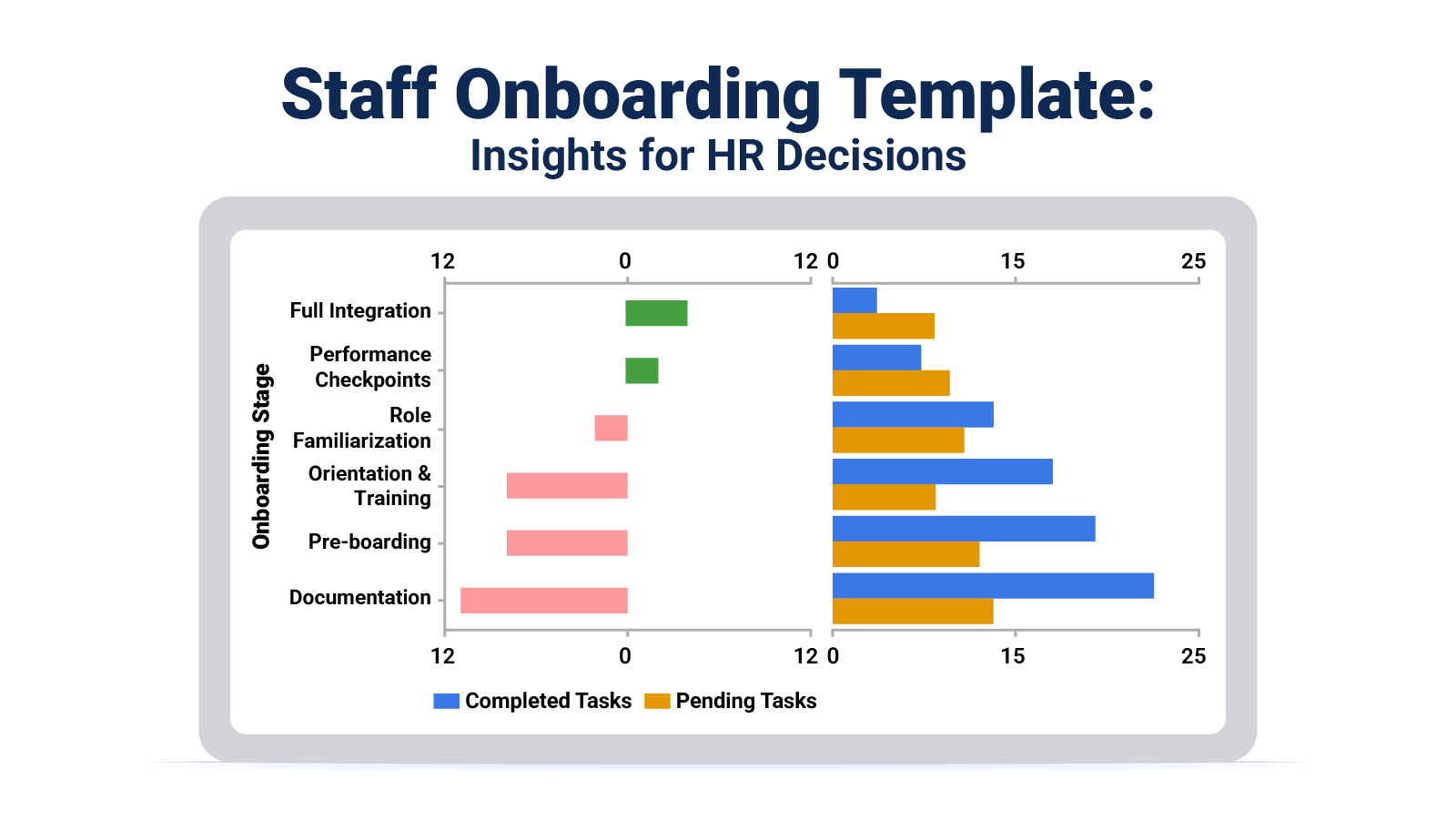
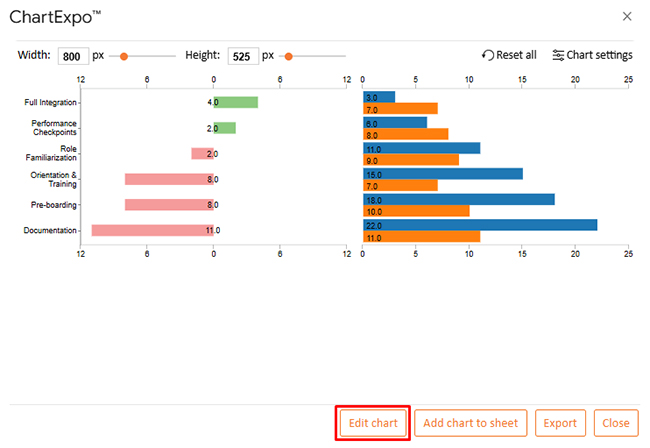
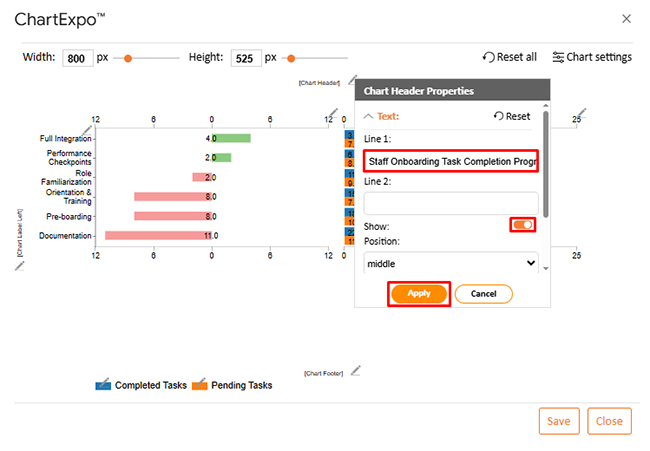
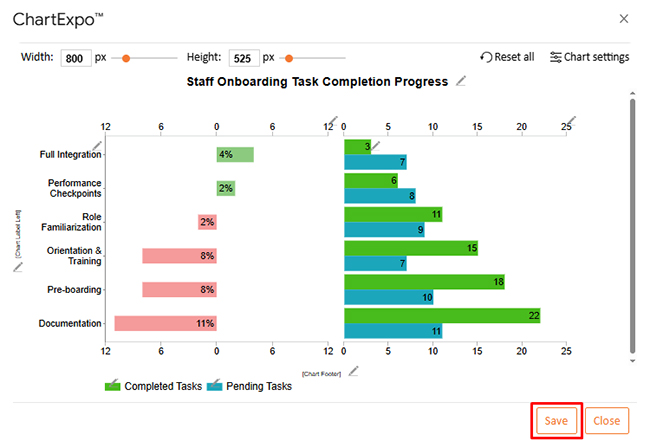
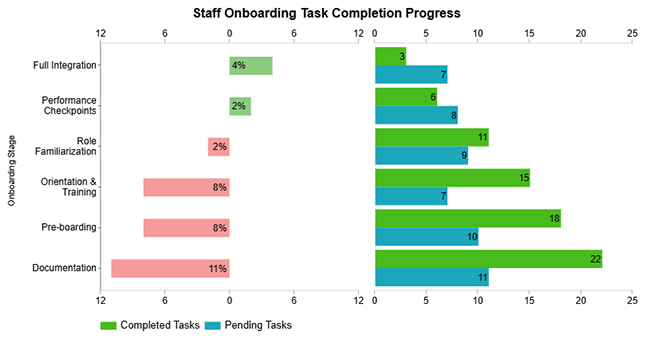
This example tracks task completion versus pending items across each onboarding phase. Strong early-phase results give way to a growing backlog in later stages, signaling where manager attention or resource reallocation may be needed.
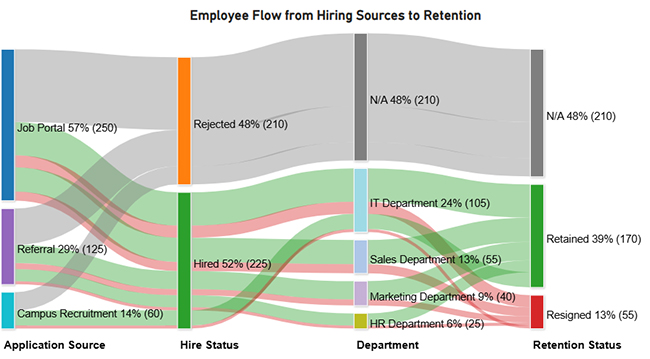
This example traces candidates from their initial hiring source through each employment stage and into either retention or attrition. It reveals which acquisition channels produce the most durable hires and identifies where the greatest drop-off in the pipeline occurs.
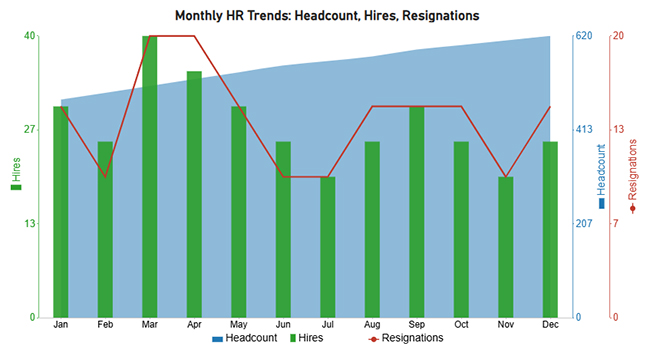
This example shows monthly movement in total headcount alongside new hire volume and resignations. The pattern reveals whether the organization is net-growing over time and highlights seasonal swings that can inform future recruiting and staffing budget decisions.
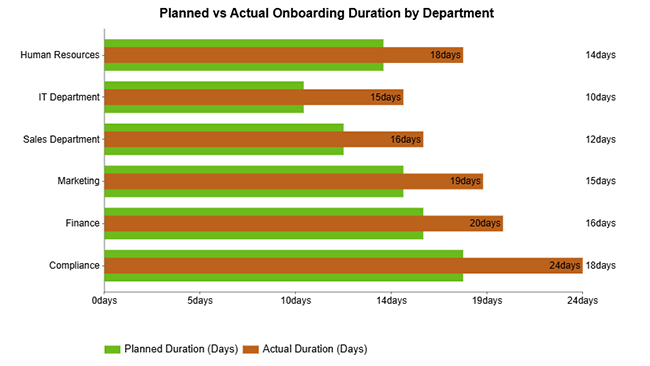
This example compares how long onboarding was planned to take against its actual duration across departments. Most teams exceed their projected schedule, pointing to a need to reassess time estimates, staffing capacity, or the depth of role-specific training.
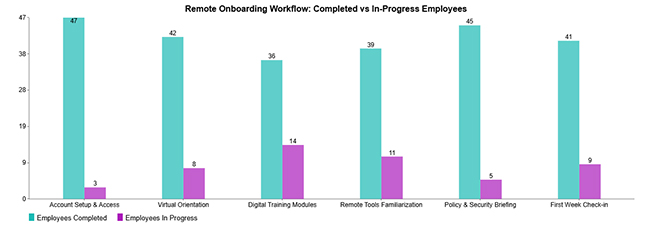
This example measures completion rates across core activities in a remote onboarding workflow, including device setup, system access, and virtual introductions. Most tasks reach completion, but a remaining subset in progress indicates where digital follow-through processes need reinforcement.
Spreadsheet tools make it practical to build, share, and update your onboarding framework without specialized software. This approach also enables data analysis in Google Sheets so teams can monitor completion patterns and timing trends as they accumulate.
When treated purely as a task list, a staff onboarding template delivers limited value. The real potential surfaces when teams analyze the data it generates, approaching the output more like a consulting report template and less like a static checklist.
Patterns in completion rates, duration variances, and engagement signals reveal exactly where the process breaks down. Treating a new employee onboarding template this way turns it from a one-time administrative exercise into a continuous improvement engine.
Visualization tools turn raw template data into presentation-ready charts that reveal patterns without requiring manual interpretation. ChartExpo integrates directly with Google Sheets, letting teams generate charts from their existing onboarding datasets with minimal setup.
Why use ChartExpo?
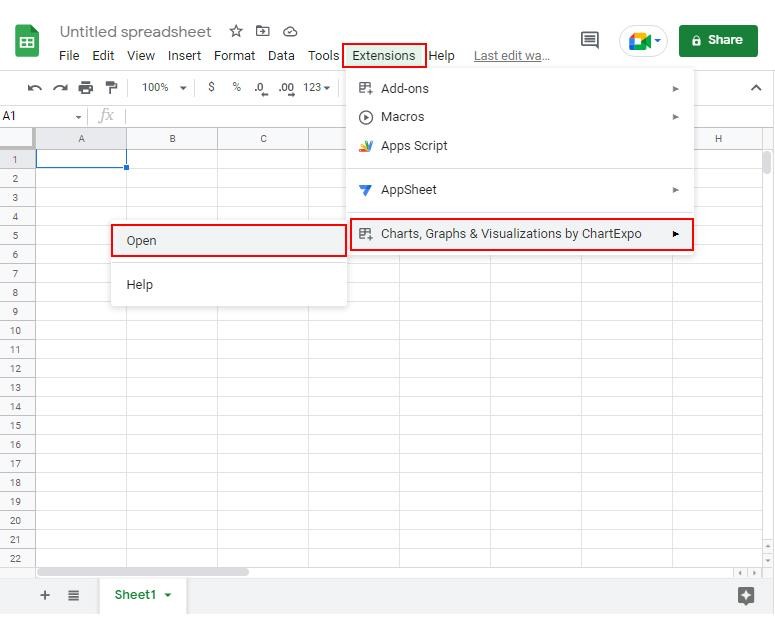
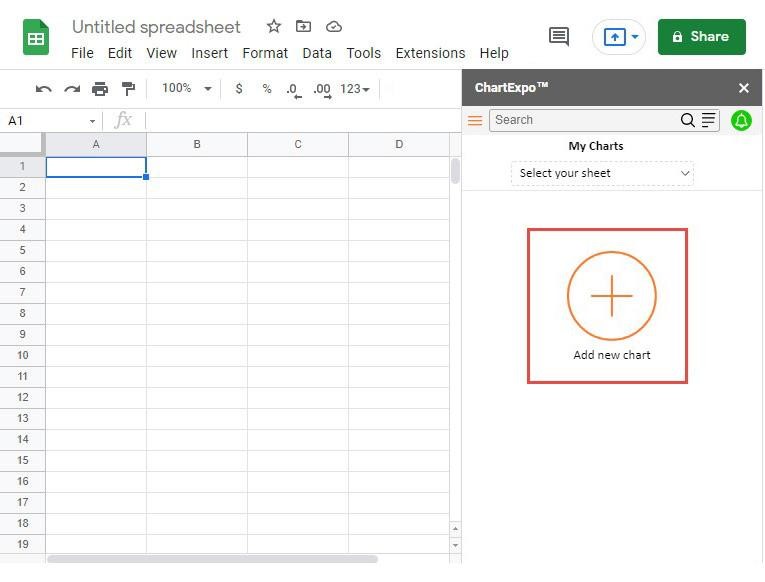
How to install ChartExpo in Google Sheets?
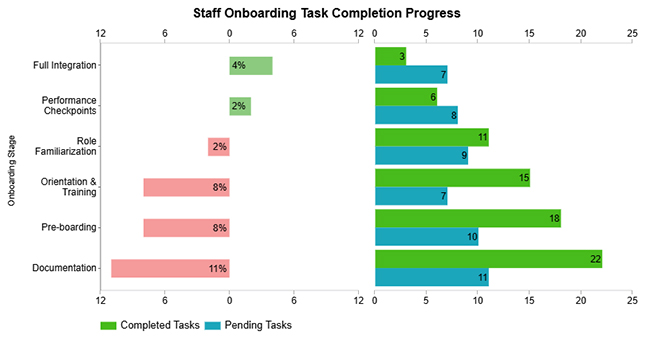
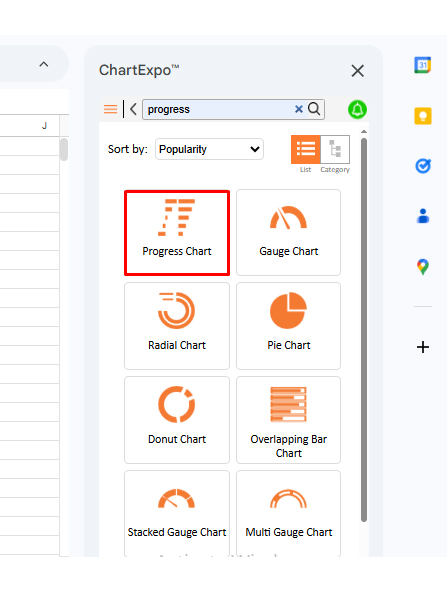
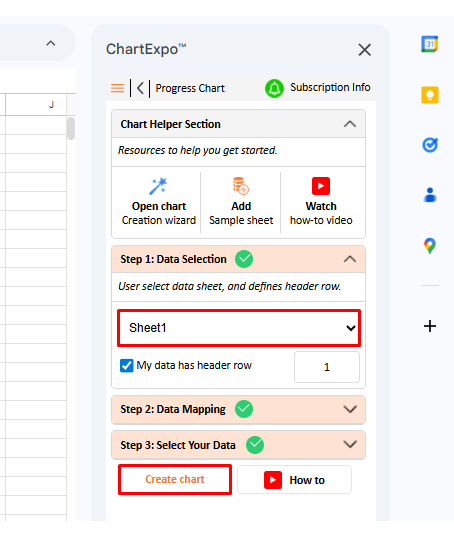
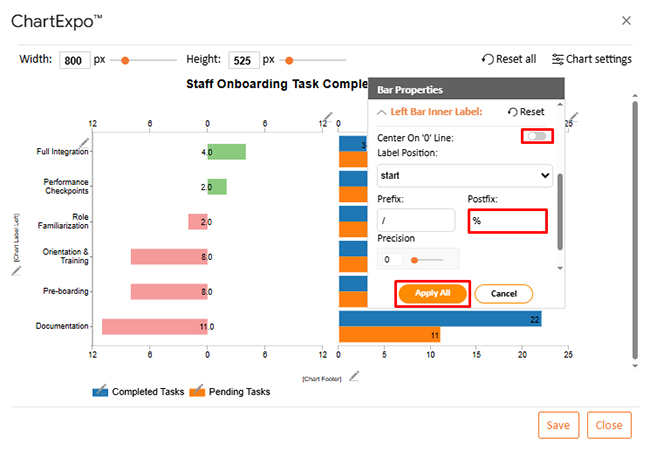
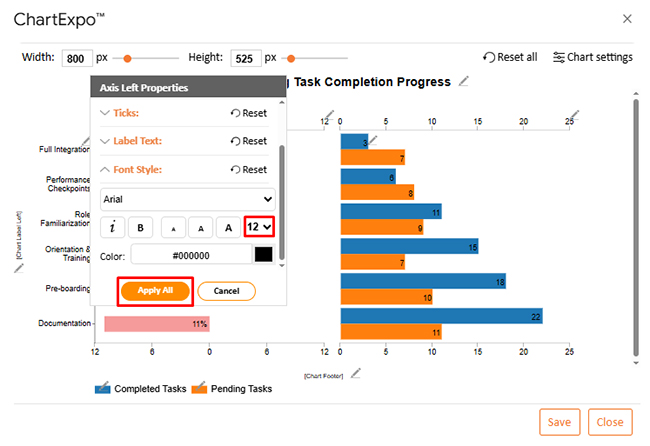
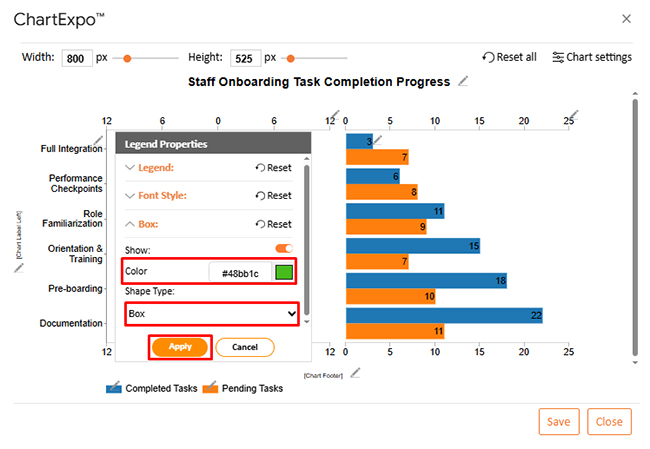
Consider we have the following data for the Progress Chart.
| Onboarding Stage | Completed Tasks | Pending Tasks |
| Pre-boarding | 18 | 10 |
| Documentation | 22 | 11 |
| Orientation & Training | 15 | 7 |
| Role Familiarization | 11 | 9 |
| Performance Checkpoints | 6 | 8 |
| Full Integration | 3 | 7 |
Formalizing the integration process pays dividends that extend well beyond the first week of employment. A structured staff onboarding template reduces uncertainty at every organizational level and lays the groundwork for performance gains that are trackable over time.
A template that goes unused is just a document. Design choices around structure, relevance, and adaptability determine whether your framework embeds itself into daily operations or gets bypassed after the first few months.
An effective template covers employee information, task checklists, training schedules, document trackers, role-specific milestones, manager approval checkpoints, and a feedback section. Together, these elements deliver a structured, accountable, and measurable experience for every new hire.
Yes. Employees who receive a structured, supported start are more likely to feel valued and stay with the organization. A formal process reduces early-stage confusion and disconnection, two of the most common drivers of voluntary turnover within the first six months.
At a minimum, review the template after any significant policy change, role restructuring, or platform shift that affects the onboarding flow. A scheduled annual review also helps ensure the framework stays aligned with how the organization actually operates.
Building an effective staff onboarding template is one of the highest-leverage decisions an HR team can make. When new employees receive structured guidance, clear expectations, and the right resources from their first day, they contribute faster, make fewer errors, and develop a stronger connection to the organization. The template makes that outcome repeatable at any scale.
A well-designed staff orientation template transforms what is often a reactive, inconsistent process into a strategic system. Pair it with data visualization to measure outcomes continuously, and onboarding shifts from a cost center into a competitive advantage. Start with a solid framework, track the results, and improve from there.
How much did you enjoy this article?


Calculate accounts receivable turnover ratio to measure credit collection speed, improve cash flow, and strengthen your financial strategy. Read on!
Change Management KPIs are the key to tracking adoption, performance, and ROI during transitions. Find out which metrics matter. Read on!
Data collection methods and techniques determine the quality of every insight you act on. Explore key approaches for gathering reliable data. Read on!