Categories

People answer more when the prompt feels human. Fun survey questions replace stiff wording with prompts that invite quick thought, small smiles, and honest replies.
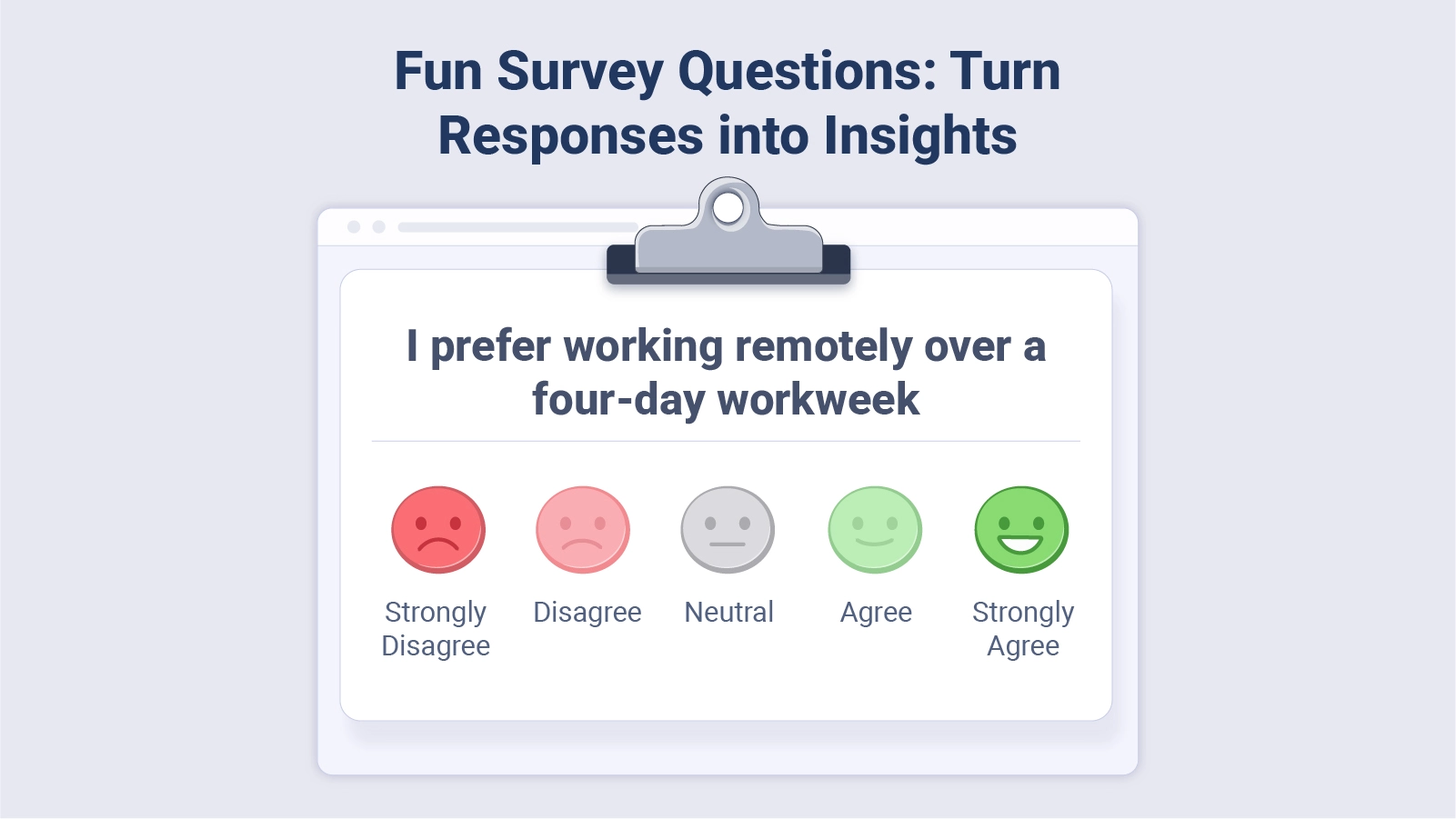
That simple shift can keep attention high from the first item to the last, even when the topic feels routine, repetitive, or very dry.
A lighter tone can improve participation without weakening the purpose. It helps teams collect cleaner input, compare views, and reduce drop-off in forms, polls, and classroom tasks.
This guide shows how funny survey questions can support planning, writing, and review without turning the form into noise, clutter, or needless confusion today.
Definition: Fun survey questions are engaging and conversational questions designed to make surveys enjoyable while still collecting meaningful data. Instead of sounding formal or rigid, these questions use humor, relatable scenarios, or simple choices to encourage participation.
They are commonly used in workplaces, classrooms, and online communities to increase response rates and make the survey experience feel less like a task and more like a conversation.
Clear wording and play can lift response quality. Fun survey questions keep the form active, useful, and easier to complete from the start.
Creating a fun survey makes responding enjoyable while still collecting useful insights. Follow these 5 simple steps to design a survey your audience will love.
Start by clarifying why you’re creating the survey. Know what insights you want and who your audience is. A clear goal ensures your questions are focused, relevant, and engaging.
Mix different types of questions to keep it fun and dynamic:
Variety keeps respondents interested.
Use clear, casual, and playful language. Keep questions short, relatable, and humorous when appropriate. Example:
“If you could have a superpower for a day, what would it be?”
Include images, emojis, or progress bars to make the survey interactive. Limit your survey to 5–15 questions so it’s quick and fun to complete.
Test the survey for clarity, share it across your channels, and analyze responses using tools like Google Sheets. Use visualizations such as a Likert Scale chart to present insights clearly.
Using different types of questions keeps surveys dynamic and interesting.
Below is a carefully crafted, unique list of funny survey questions categorized for different use cases.
Examples show how a lighter tone can guide responses.
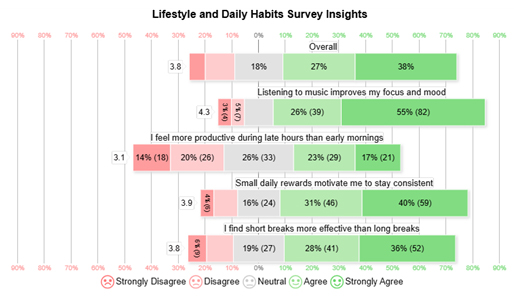
This example points to broad agreement around focus and rest. Many responses favor music during work and short breaks during the day, which suggests comfort with simple habits.
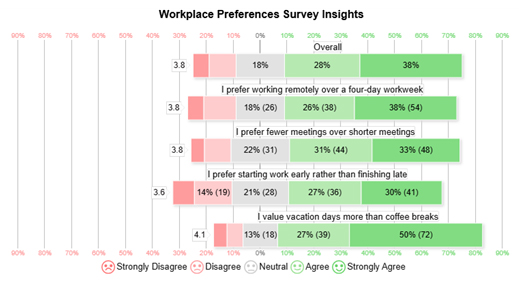
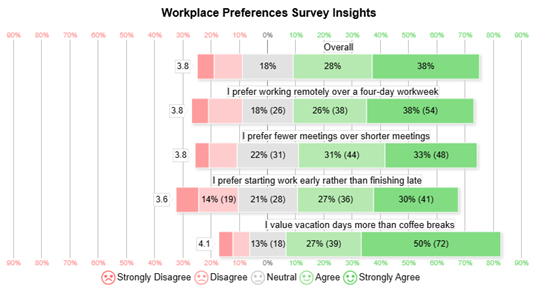
This example shows clear support for remote work, fewer meetings, and vacation time. Most selections gather in the Agree and Strongly Agree range, which signals steady alignment.
One of the best ways to analyze opinion-based survey questions is using a Likert Scale chart. Unlike regular bar charts, a Likert Scale chart is specifically designed to display gradations of agreement or disagreement for each statement, making it ideal for fun survey questionnaires, workplace preferences, or opinion polls.
A Likert Scale chart typically uses categories such as:
To prepare your data for a Likert Scale chart in Google Sheets:
This structured format ensures that your Likert Scale chart is accurate and easy to interpret.
Even without numerical values, you can prepare the data conceptually for a Likert Scale chart:
A Likert Scale chart displays the proportion of responses across agreement levels for each question.
In Google Sheets:
The chart allows you to see overall trends and opinions at a glance:
Once the chart is created:
Silly survey questions can improve outcomes beyond participation alone.
A workable plan needs structure and restraint.
Fun questions make surveys more engaging by turning them into a conversational and enjoyable experience. They reduce boredom and increase completion rates, leading to more reliable responses. They also encourage honest answers by helping respondents feel relaxed and comfortable.
They fit employee feedback, class activities, customer polls, team check-ins, and community outreach. They work best when attention is limited, and the form needs steady completion across many groups, settings, and time frames.
Good, funny survey questions are simple, relatable, and engaging. They use clear language, feel conversational, and often include playful or creative options. Most importantly, they keep respondents interested while still serving the purpose of the survey.
Fun survey questions work best when they feel playful but still serve a clear goal. The strongest versions use simple wording, fit the audience, and make it easier for people to finish the form with useful, honest input. That balance protects both tone and purpose in every setting.
When the wording matches the setting, participation rises, and review becomes easier. A smart mix of short prompts, clear choices, and hilarious survey questions can keep attention high while still producing answers you can sort, compare, and use with confidence. That makes the final data easier to trust and easier to act on.
How much did you enjoy this article?


Google Forms to Google Sheets keeps your data organized and current with every submission. Learn the steps, methods, and tips now!
Product survey questions reveal what customers truly think. Learn how to ask the right ones and act on the survey results. Read on!
Learn how the 5-Point Performance Rating Scale improves employee evaluations with clear, consistent, and fair performance reviews across teams.